August 10, 2026
LATEST
Five Joint Defence Projects Launch Europe’s Military ShieldElectrification Plan Aims to Make Europe First Electro ContinentHorizon Europe Budget Fight Heats Up as Ministers Push BackGoogle’s DMA Fine Sets Off a Transatlantic Tariff ClashTwenty New University Alliances Join Erasmus for Two YearsForeign Subsidies Case Puts Temu in the EU’s SightsVan Tachographs Now Mandatory for Cross-Border FleetsStress Test Exposes Gaps in Euro Area Bank DefencesEurope Bets on a Gulf Partnership Before the Riyadh SummitWhy the Atlantic Route Now Runs Through MauritaniaKyiv and Chisinau Advance as the EU Accession Talks Gather PaceEurope’s New Digital Border System Beds In After a Rocky RolloutBrussels Mounts Its Largest Wildfire Response as the Fires SpreadRetail Spending Slipped in June, Wrong-Footing EconomistsHeatwave Warning Puts Brussels on Alert for Vulnerable GroupsKANAL’s 230 Million Euro Museum Sets a November Opening DatePension Savings Rules Get a Reset as the EU Scraps the 1% CapMedicine Shortages Move to the Heart of Europe’s Pharma ResetJapan Becomes Europe’s Closest Security Partner in AsiaCan Europe’s New Zealand Deal Anchor It in the Pacific?Five Joint Defence Projects Launch Europe’s Military ShieldElectrification Plan Aims to Make Europe First Electro ContinentHorizon Europe Budget Fight Heats Up as Ministers Push BackGoogle’s DMA Fine Sets Off a Transatlantic Tariff ClashTwenty New University Alliances Join Erasmus for Two YearsForeign Subsidies Case Puts Temu in the EU’s SightsVan Tachographs Now Mandatory for Cross-Border FleetsStress Test Exposes Gaps in Euro Area Bank DefencesEurope Bets on a Gulf Partnership Before the Riyadh SummitWhy the Atlantic Route Now Runs Through MauritaniaKyiv and Chisinau Advance as the EU Accession Talks Gather PaceEurope’s New Digital Border System Beds In After a Rocky RolloutBrussels Mounts Its Largest Wildfire Response as the Fires SpreadRetail Spending Slipped in June, Wrong-Footing EconomistsHeatwave Warning Puts Brussels on Alert for Vulnerable GroupsKANAL’s 230 Million Euro Museum Sets a November Opening DatePension Savings Rules Get a Reset as the EU Scraps the 1% CapMedicine Shortages Move to the Heart of Europe’s Pharma ResetJapan Becomes Europe’s Closest Security Partner in AsiaCan Europe’s New Zealand Deal Anchor It in the Pacific?
August 10, 2026
LATEST
Five Joint Defence Projects Launch Europe’s Military ShieldElectrification Plan Aims to Make Europe First Electro ContinentHorizon Europe Budget Fight Heats Up as Ministers Push BackGoogle’s DMA Fine Sets Off a Transatlantic Tariff ClashTwenty New University Alliances Join Erasmus for Two YearsForeign Subsidies Case Puts Temu in the EU’s SightsVan Tachographs Now Mandatory for Cross-Border FleetsStress Test Exposes Gaps in Euro Area Bank DefencesEurope Bets on a Gulf Partnership Before the Riyadh SummitWhy the Atlantic Route Now Runs Through MauritaniaKyiv and Chisinau Advance as the EU Accession Talks Gather PaceEurope’s New Digital Border System Beds In After a Rocky RolloutBrussels Mounts Its Largest Wildfire Response as the Fires SpreadRetail Spending Slipped in June, Wrong-Footing EconomistsHeatwave Warning Puts Brussels on Alert for Vulnerable GroupsKANAL’s 230 Million Euro Museum Sets a November Opening DatePension Savings Rules Get a Reset as the EU Scraps the 1% CapMedicine Shortages Move to the Heart of Europe’s Pharma ResetJapan Becomes Europe’s Closest Security Partner in AsiaCan Europe’s New Zealand Deal Anchor It in the Pacific?Five Joint Defence Projects Launch Europe’s Military ShieldElectrification Plan Aims to Make Europe First Electro ContinentHorizon Europe Budget Fight Heats Up as Ministers Push BackGoogle’s DMA Fine Sets Off a Transatlantic Tariff ClashTwenty New University Alliances Join Erasmus for Two YearsForeign Subsidies Case Puts Temu in the EU’s SightsVan Tachographs Now Mandatory for Cross-Border FleetsStress Test Exposes Gaps in Euro Area Bank DefencesEurope Bets on a Gulf Partnership Before the Riyadh SummitWhy the Atlantic Route Now Runs Through MauritaniaKyiv and Chisinau Advance as the EU Accession Talks Gather PaceEurope’s New Digital Border System Beds In After a Rocky RolloutBrussels Mounts Its Largest Wildfire Response as the Fires SpreadRetail Spending Slipped in June, Wrong-Footing EconomistsHeatwave Warning Puts Brussels on Alert for Vulnerable GroupsKANAL’s 230 Million Euro Museum Sets a November Opening DatePension Savings Rules Get a Reset as the EU Scraps the 1% CapMedicine Shortages Move to the Heart of Europe’s Pharma ResetJapan Becomes Europe’s Closest Security Partner in AsiaCan Europe’s New Zealand Deal Anchor It in the Pacific?

Lisbon Seizure Exposes a Counterfeit Network Feeding Europe’s Roads

Lisbon: At a logistics terminal on the edge of the Portuguese capital, customs officers worked through a shipping container that, on paper, held nothing more exciting than automotive components. What they found instead was a cache of truck parts bearing the logos of well-known European manufacturers, none of which had ever left those manufacturers’ factories. The seizure, confirmed by the European Anti-Fraud Office in early June, was the visible end of a much longer investigation into a counterfeiting network that had been routing fake parts through Türkiye and into the EU’s commercial vehicle supply chain.

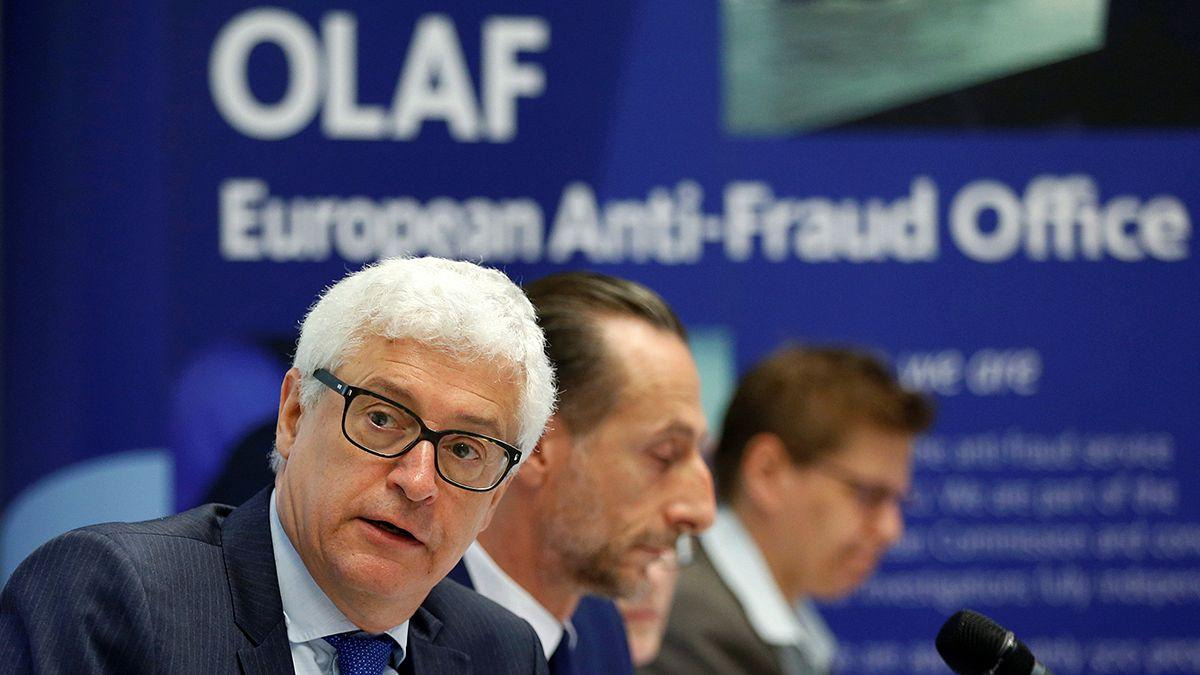
For OLAF, the case is a useful illustration of what its work actually looks like in practice. The office does not have police powers of its own; its role is to gather intelligence, trace financial and logistical trails across borders, and hand coordinated packages of evidence to national customs authorities and the brand owners whose trademarks have been abused. In this instance, that meant matching shipment records, tracing the chain of intermediaries, and working with Portuguese customs to intercept the goods before they reached workshops and resellers. The parts in question were not cosmetic trim but components tied to braking and steering systems — the kind of part where a manufacturing shortcut is not merely a trademark issue but a road safety one.

The scale of the counterfeit trade in vehicle parts is easy to underestimate because so much of it is invisible by design. Counterfeit components are typically sold through the same distribution channels as genuine parts, often at a discount small enough not to raise suspicion, and packaged with convincing replica branding. Independent garages, particularly those serving long-haul freight operators working on tight margins, are a common destination. The economic incentive is straightforward: a counterfeit brake component can cost a fraction of the genuine article, and the buyer may never know the difference until it fails.

This is where OLAF’s mandate intersects with several other EU policy strands at once. Road safety regulators have spent years tightening type-approval and roadworthiness testing rules for commercial vehicles, but those rules assume that a part installed under a vehicle is what its markings claim it to be. A counterfeit braking component that passes a visual inspection but fails under load undermines that entire framework, regardless of how rigorous the original approval process was.

The Lisbon case also points to a broader pattern that OLAF has flagged in its recent work: counterfeiting operations increasingly use the EU’s external trade relationships as a laundering point, with goods manufactured in one third country, transited through another, and documented in ways designed to obscure origin. OLAF’s June calendar reflected this shift in focus, with sessions in Helsinki and Cyprus this year bringing together investigators from across the bloc to share techniques for tracing exactly this kind of multi-jurisdictional trail.

What the Lisbon seizure does not resolve is the underlying economics. As long as the price gap between genuine and counterfeit parts remains wide, and as long as enforcement depends on intercepting individual shipments rather than dismantling the networks that produce them, similar consignments will keep arriving at ports and terminals across the Union. OLAF’s own assessment is that coordination — between customs administrations, brand owners, and law enforcement in third countries — is the only lever that scales. The Lisbon case succeeded because all three pieces were in place. Whether that can be replicated systematically, rather than case by case, is the question OLAF’s coordinators will be asking long after this particular container has been emptied.