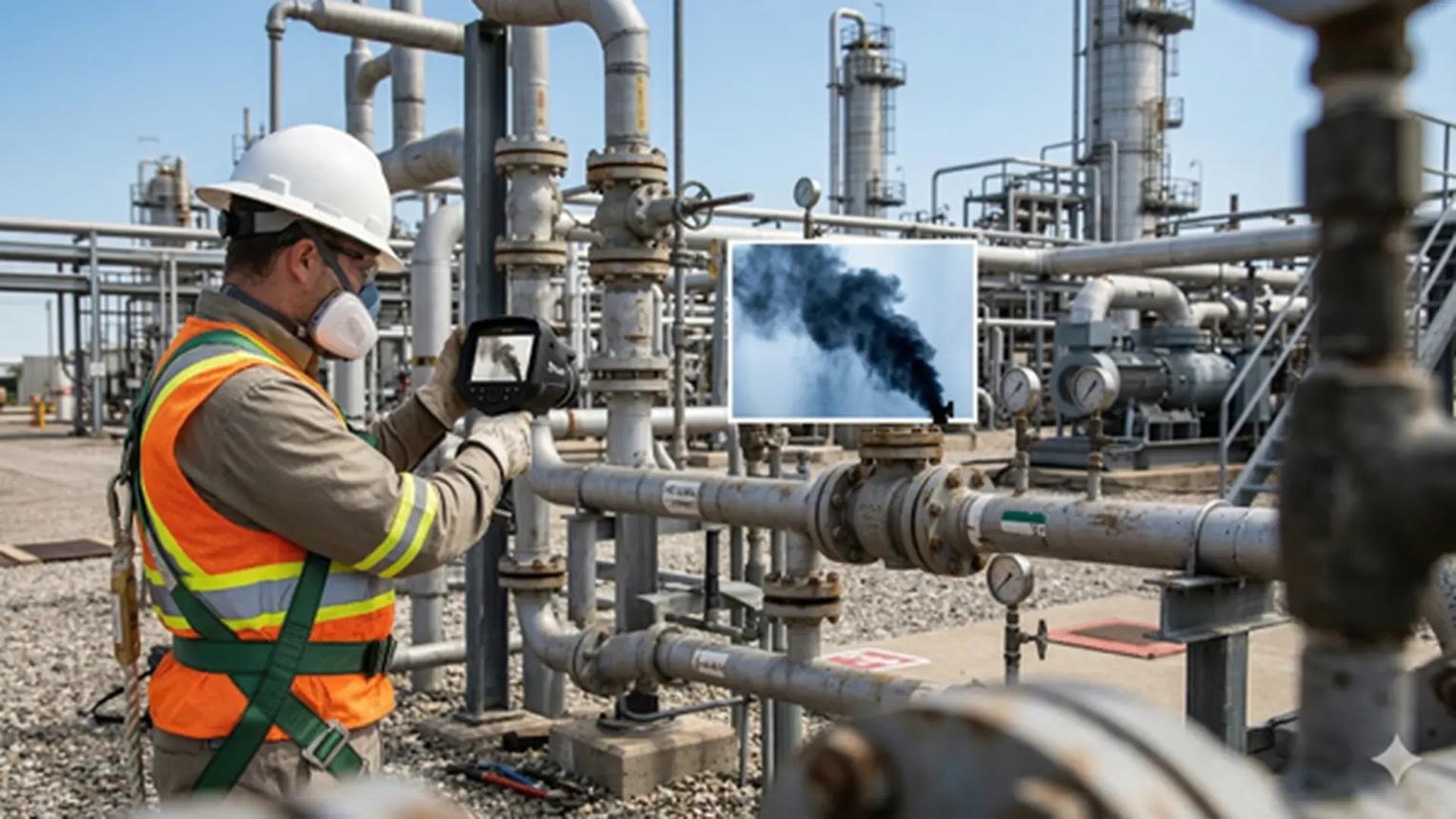
Rotterdam: At the terminals where tankers of liquefied gas arrive from across the Atlantic and the Gulf, a regulatory deadline is concentrating minds. From the start of 2027 the Union’s methane regulation begins to reach beyond its own borders, requiring importers of oil and gas to show that what they buy is produced under monitoring standards comparable to those Europe now imposes at home. For a bloc that leans heavily on imported energy, the rule is both a climate lever and a commercial gamble.
Methane is the reason the Union is pressing so hard. The gas is many times more potent than carbon dioxide over the short term, and leaks from wells, pipelines and terminals account for a large share of the energy sector’s climate footprint. The regulation adopted in 2024 already obliges domestic operators to detect and repair leaks and to curb routine flaring and venting. Its import provisions extend that logic outward, on the theory that the Union’s purchasing power can push producers in exporting countries to clean up operations they would otherwise leave unmeasured.
The near-term requirement is procedural but consequential. Importers must demonstrate, for contracts concluded or renewed since August 2024, that the oil and gas they cover is subject to monitoring, reporting and verification equivalent to European rules. A stricter test follows later in the decade, when the Commission is due to set maximum methane-intensity values that imported fuels must meet, enforced through delegated acts. Officials have signalled they are weighing a country-level standard to make the equivalence judgement workable.
Here the anxiety sharpens. Industry analysts have modelled a strict reading of the rules and warned of disruption: in one widely cited scenario, if few exporting countries achieve recognised equivalence by 2027, the overwhelming majority of the Union’s crude imports and a substantial share of its gas could fall foul of the requirements. Producer associations warn that an inflexible application could tighten supply and raise prices at a time when Europe is still recovering from the energy shock of recent years. The Commission has published guidance intended to reassure importers that the near-term obligations are about transparency rather than exclusion, and that the harder intensity limits lie further off.
The outcome will depend on choices not yet made. How generously equivalence is defined, whether major suppliers in North America, Norway and North Africa move to meet European monitoring expectations, and how the Commission calibrates its delegated acts will together decide whether the regulation nudges global producers toward cleaner operations or simply reshuffles where Europe buys its fuel. Environmental groups argue the rules are the first serious attempt to hold imported energy to the same standard as domestic production. Sceptics counter that a bloc dependent on others for its energy has less leverage than the text assumes. Both will be watching the 2027 deadline closely.