August 29, 2026
LATEST
What Europe Needs From the GCC Summit Riyadh Will Host in AutumnHolding Limits Still Block a Digital Euro Deal Before DecemberData Rules Agreed With Seoul Now Wait on Parliament’s ConsentChina Listed Fourteen European Firms and November Ends the TruceWhy Australia’s Finished Trade Deal Still Has No Signature DateLate Application Leaves Tokyo Outside the Defence Loan QueueCyber Resilience Rules Give Makers 24 Hours From SeptemberWinter Stocks Test Europe’s New Gas Storage Flexibility RulesInnovation Theory Meets Merger Control in a New Commission StudyMercosur Tariffs Fell in May and the Court Has Not Ruled YetBilaterals III Now Turns on Which Referendum Switzerland PicksDark Patterns Face the EU Digital Fairness ActFifteen Chapters Stand Between Montenegro and 2028Who Blinks First in the FP10 Research Budget FightCustoms Reform Landed in March and Its Data Hub Opens in 2028Victims Rights Gain an EU Helpline and Capitals Have Two YearsIreland Must Move the EU Budget Box Before the October SummitFertiliser Prices Sit 71 Percent Above Their 2024 Average LevelState Aid Exemptions Face a Rewrite With Four Months to SpareIrregular Crossings Fell 37 Percent and Spain Is the ExceptionWhat Europe Needs From the GCC Summit Riyadh Will Host in AutumnHolding Limits Still Block a Digital Euro Deal Before DecemberData Rules Agreed With Seoul Now Wait on Parliament’s ConsentChina Listed Fourteen European Firms and November Ends the TruceWhy Australia’s Finished Trade Deal Still Has No Signature DateLate Application Leaves Tokyo Outside the Defence Loan QueueCyber Resilience Rules Give Makers 24 Hours From SeptemberWinter Stocks Test Europe’s New Gas Storage Flexibility RulesInnovation Theory Meets Merger Control in a New Commission StudyMercosur Tariffs Fell in May and the Court Has Not Ruled YetBilaterals III Now Turns on Which Referendum Switzerland PicksDark Patterns Face the EU Digital Fairness ActFifteen Chapters Stand Between Montenegro and 2028Who Blinks First in the FP10 Research Budget FightCustoms Reform Landed in March and Its Data Hub Opens in 2028Victims Rights Gain an EU Helpline and Capitals Have Two YearsIreland Must Move the EU Budget Box Before the October SummitFertiliser Prices Sit 71 Percent Above Their 2024 Average LevelState Aid Exemptions Face a Rewrite With Four Months to SpareIrregular Crossings Fell 37 Percent and Spain Is the Exception
August 29, 2026
LATEST
What Europe Needs From the GCC Summit Riyadh Will Host in AutumnHolding Limits Still Block a Digital Euro Deal Before DecemberData Rules Agreed With Seoul Now Wait on Parliament’s ConsentChina Listed Fourteen European Firms and November Ends the TruceWhy Australia’s Finished Trade Deal Still Has No Signature DateLate Application Leaves Tokyo Outside the Defence Loan QueueCyber Resilience Rules Give Makers 24 Hours From SeptemberWinter Stocks Test Europe’s New Gas Storage Flexibility RulesInnovation Theory Meets Merger Control in a New Commission StudyMercosur Tariffs Fell in May and the Court Has Not Ruled YetBilaterals III Now Turns on Which Referendum Switzerland PicksDark Patterns Face the EU Digital Fairness ActFifteen Chapters Stand Between Montenegro and 2028Who Blinks First in the FP10 Research Budget FightCustoms Reform Landed in March and Its Data Hub Opens in 2028Victims Rights Gain an EU Helpline and Capitals Have Two YearsIreland Must Move the EU Budget Box Before the October SummitFertiliser Prices Sit 71 Percent Above Their 2024 Average LevelState Aid Exemptions Face a Rewrite With Four Months to SpareIrregular Crossings Fell 37 Percent and Spain Is the ExceptionWhat Europe Needs From the GCC Summit Riyadh Will Host in AutumnHolding Limits Still Block a Digital Euro Deal Before DecemberData Rules Agreed With Seoul Now Wait on Parliament’s ConsentChina Listed Fourteen European Firms and November Ends the TruceWhy Australia’s Finished Trade Deal Still Has No Signature DateLate Application Leaves Tokyo Outside the Defence Loan QueueCyber Resilience Rules Give Makers 24 Hours From SeptemberWinter Stocks Test Europe’s New Gas Storage Flexibility RulesInnovation Theory Meets Merger Control in a New Commission StudyMercosur Tariffs Fell in May and the Court Has Not Ruled YetBilaterals III Now Turns on Which Referendum Switzerland PicksDark Patterns Face the EU Digital Fairness ActFifteen Chapters Stand Between Montenegro and 2028Who Blinks First in the FP10 Research Budget FightCustoms Reform Landed in March and Its Data Hub Opens in 2028Victims Rights Gain an EU Helpline and Capitals Have Two YearsIreland Must Move the EU Budget Box Before the October SummitFertiliser Prices Sit 71 Percent Above Their 2024 Average LevelState Aid Exemptions Face a Rewrite With Four Months to SpareIrregular Crossings Fell 37 Percent and Spain Is the Exception

Gene-Edited Crops Won Their Law and Now Meet 27 Referees

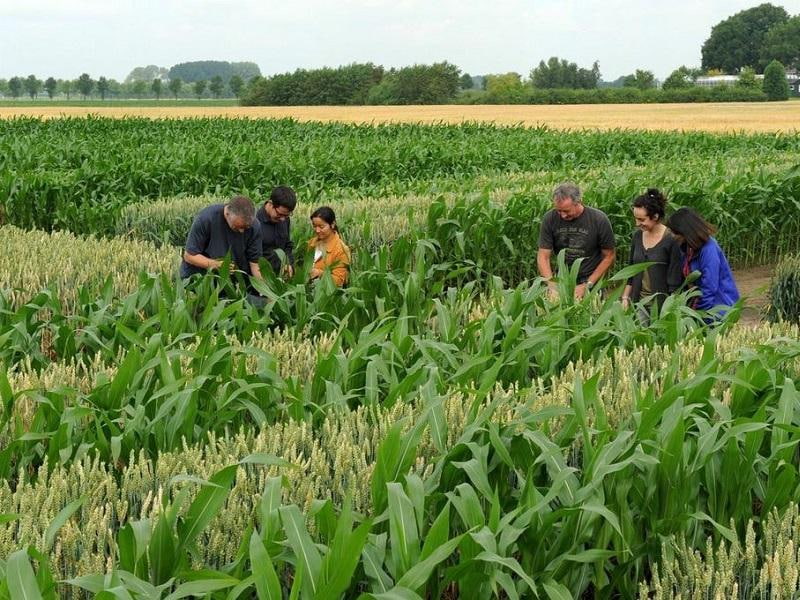
Wageningen: The plant-breeding laboratories clustered around this Dutch university spent two decades working under rules written before their main technique existed. That ended in June, when the European Parliament gave final approval to the regulation on plants produced through new genomic techniques, the Council having signed off in the spring. The law will apply roughly two years after publication.

The reform does one decisive thing. It splits gene-edited plants into two categories and treats the first as conventional. A category 1 plant, judged equivalent to something a breeder could have produced by crossing and selection, escapes the 2001 GMO framework and its authorisation burden. A category 2 plant stays inside it. That single distinction determines whether a variety reaches the market in months or in years.

What the compromise actually conceded

Neither camp got the text it wanted in the December compromise, which is usually a sign the deal will hold. Breeders won the simplified pathway and the confirmation that offspring of a verified category 1 plant need no further check. They also lost ground. Parliament secured an exclusion list of traits that cannot qualify for category 1, including herbicide tolerance and insecticidal effects, pushing the products most associated with industrial agriculture back into the stricter track.

Labelling produced the sharpest fight and the least satisfying outcome. Category 1 plants carry no consumer label. Seed and other reproductive material must be identified, which is meant to let operators build and maintain gene-edited-free supply chains if the market wants them. Organic producers regard that as insufficient, and their objection is practical rather than ideological. A supply chain cannot be kept free of something it cannot detect downstream, and traceability that stops at the seed bag leaves everyone after the farm gate relying on paperwork.

The organic sector did secure a workable safeguard. New genomic techniques stay prohibited in organic production, but the technically unavoidable presence of a category 1 plant will not by itself constitute non-compliance. Without that clause a single stray pollen grain could have decertified a farm. With it, the prohibition survives contact with reality.

Twenty-seven referees for one rulebook

The implementation risk sits in national hands, and it is larger than the text suggests. National authorities verify category 1 status. Member states may opt out of cultivating category 2 plants on their territory. Coexistence measures, which govern buffer distances and separation between neighbouring farms, are optional and national.

That combination invites divergence. A variety verified in one member state circulates across the single market, so a permissive national authority effectively decides for everyone, while a restrictive one slows its own breeders without stopping the product. Optional coexistence rules mean a farmer’s obligations toward the field next door depend on which side of a border the field sits. The regulation harmonises the science and devolves the friction.

Patents remain the unresolved file. The regulation leaves patent law where it found it, under the biotechnology directive, and adds transparency instead. Developers must record relevant patents in a public database and may signal licensing intentions voluntarily. The Commission will publish a study on how patenting affects innovation, seed availability and competitiveness within a year of entry into force.

Transparency is not a remedy. Small and medium breeders, who supply a large share of European vegetable and cereal varieties, worry that a handful of patent holders will control the traits worth editing and license them selectively. A public register tells a breeder exactly which door is closed. It does not open it. That study will arrive into a market where positions have already hardened.

Europe has therefore chosen a middle path that gives its plant scientists a usable regulatory route while leaving cultivation politics, coexistence and intellectual property to be settled elsewhere. The scientific argument is largely over. The distributional one is only starting.