August 10, 2026
LATEST
Five Joint Defence Projects Launch Europe’s Military ShieldElectrification Plan Aims to Make Europe First Electro ContinentHorizon Europe Budget Fight Heats Up as Ministers Push BackGoogle’s DMA Fine Sets Off a Transatlantic Tariff ClashTwenty New University Alliances Join Erasmus for Two YearsForeign Subsidies Case Puts Temu in the EU’s SightsVan Tachographs Now Mandatory for Cross-Border FleetsStress Test Exposes Gaps in Euro Area Bank DefencesEurope Bets on a Gulf Partnership Before the Riyadh SummitWhy the Atlantic Route Now Runs Through MauritaniaKyiv and Chisinau Advance as the EU Accession Talks Gather PaceEurope’s New Digital Border System Beds In After a Rocky RolloutBrussels Mounts Its Largest Wildfire Response as the Fires SpreadRetail Spending Slipped in June, Wrong-Footing EconomistsHeatwave Warning Puts Brussels on Alert for Vulnerable GroupsKANAL’s 230 Million Euro Museum Sets a November Opening DatePension Savings Rules Get a Reset as the EU Scraps the 1% CapMedicine Shortages Move to the Heart of Europe’s Pharma ResetJapan Becomes Europe’s Closest Security Partner in AsiaCan Europe’s New Zealand Deal Anchor It in the Pacific?Five Joint Defence Projects Launch Europe’s Military ShieldElectrification Plan Aims to Make Europe First Electro ContinentHorizon Europe Budget Fight Heats Up as Ministers Push BackGoogle’s DMA Fine Sets Off a Transatlantic Tariff ClashTwenty New University Alliances Join Erasmus for Two YearsForeign Subsidies Case Puts Temu in the EU’s SightsVan Tachographs Now Mandatory for Cross-Border FleetsStress Test Exposes Gaps in Euro Area Bank DefencesEurope Bets on a Gulf Partnership Before the Riyadh SummitWhy the Atlantic Route Now Runs Through MauritaniaKyiv and Chisinau Advance as the EU Accession Talks Gather PaceEurope’s New Digital Border System Beds In After a Rocky RolloutBrussels Mounts Its Largest Wildfire Response as the Fires SpreadRetail Spending Slipped in June, Wrong-Footing EconomistsHeatwave Warning Puts Brussels on Alert for Vulnerable GroupsKANAL’s 230 Million Euro Museum Sets a November Opening DatePension Savings Rules Get a Reset as the EU Scraps the 1% CapMedicine Shortages Move to the Heart of Europe’s Pharma ResetJapan Becomes Europe’s Closest Security Partner in AsiaCan Europe’s New Zealand Deal Anchor It in the Pacific?
August 10, 2026
LATEST
Five Joint Defence Projects Launch Europe’s Military ShieldElectrification Plan Aims to Make Europe First Electro ContinentHorizon Europe Budget Fight Heats Up as Ministers Push BackGoogle’s DMA Fine Sets Off a Transatlantic Tariff ClashTwenty New University Alliances Join Erasmus for Two YearsForeign Subsidies Case Puts Temu in the EU’s SightsVan Tachographs Now Mandatory for Cross-Border FleetsStress Test Exposes Gaps in Euro Area Bank DefencesEurope Bets on a Gulf Partnership Before the Riyadh SummitWhy the Atlantic Route Now Runs Through MauritaniaKyiv and Chisinau Advance as the EU Accession Talks Gather PaceEurope’s New Digital Border System Beds In After a Rocky RolloutBrussels Mounts Its Largest Wildfire Response as the Fires SpreadRetail Spending Slipped in June, Wrong-Footing EconomistsHeatwave Warning Puts Brussels on Alert for Vulnerable GroupsKANAL’s 230 Million Euro Museum Sets a November Opening DatePension Savings Rules Get a Reset as the EU Scraps the 1% CapMedicine Shortages Move to the Heart of Europe’s Pharma ResetJapan Becomes Europe’s Closest Security Partner in AsiaCan Europe’s New Zealand Deal Anchor It in the Pacific?Five Joint Defence Projects Launch Europe’s Military ShieldElectrification Plan Aims to Make Europe First Electro ContinentHorizon Europe Budget Fight Heats Up as Ministers Push BackGoogle’s DMA Fine Sets Off a Transatlantic Tariff ClashTwenty New University Alliances Join Erasmus for Two YearsForeign Subsidies Case Puts Temu in the EU’s SightsVan Tachographs Now Mandatory for Cross-Border FleetsStress Test Exposes Gaps in Euro Area Bank DefencesEurope Bets on a Gulf Partnership Before the Riyadh SummitWhy the Atlantic Route Now Runs Through MauritaniaKyiv and Chisinau Advance as the EU Accession Talks Gather PaceEurope’s New Digital Border System Beds In After a Rocky RolloutBrussels Mounts Its Largest Wildfire Response as the Fires SpreadRetail Spending Slipped in June, Wrong-Footing EconomistsHeatwave Warning Puts Brussels on Alert for Vulnerable GroupsKANAL’s 230 Million Euro Museum Sets a November Opening DatePension Savings Rules Get a Reset as the EU Scraps the 1% CapMedicine Shortages Move to the Heart of Europe’s Pharma ResetJapan Becomes Europe’s Closest Security Partner in AsiaCan Europe’s New Zealand Deal Anchor It in the Pacific?

Informal track unlocks Ukraine and Moldova accession path

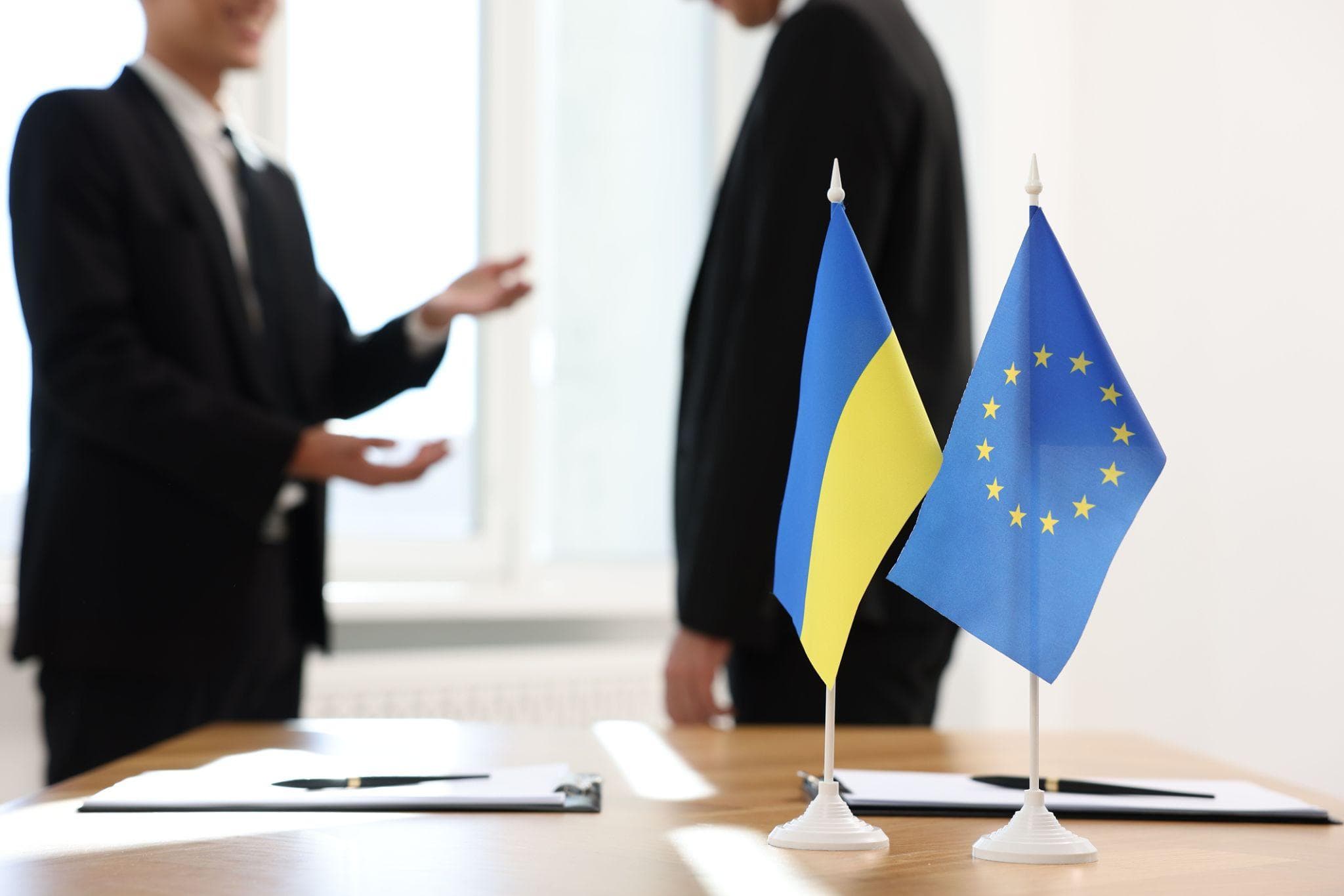
Brussels: The decision in March 2026 to begin informal work on all thirty-three policy chapters with Ukraine and Moldova, despite the absence of unanimous member-state consent to formally open the corresponding clusters, has quietly become the most consequential procedural innovation in EU enlargement policy in two decades. The mechanism, agreed at official level among twenty-six capitals and now sustained through bilateral and Commission-led tracks, allows screening reports to be tabled, opening benchmarks to be drafted and bilateral negotiation positions to be exchanged without the formal Intergovernmental Conference signature that Budapest has withheld since the autumn of 2024.

The constitutional architecture matters. The accession treaties require unanimous consent for the formal opening and closing of negotiations, a rule that gives every member state a continuous veto across the life of the process. The informal track does not modify that rule. It does, however, exhaust almost every substantive task that a formal cluster opening would entail, so that when political conditions change, the gap between informal and formal status can be closed in weeks rather than years. For Ukraine, which completed its screening in September 2025 and has set itself the objective of provisionally closing all chapters by the end of 2028, the time saved is non-trivial.

Hungary’s position has hardened around the rule-of-law and minority-protection arguments that Prime Minister Viktor Orbán has restated at successive European Councils. The informal track is therefore not an attempt to outflank a single concern, but a recognition that the accession process needs an institutional response to repeated unilateral blocks. The Council Presidency has framed the new mechanism in terms compatible with the treaties. Progress can be made in parallel with the formal process and recognised as such once consensus returns. Critics argue that the precedent risks normalising a two-speed enlargement in which the most demanding states withdraw from the negotiation room while still retaining the right to veto the result.

For Moldova, the trajectory looks operationally smoother. The Commission has assessed that Chişinău has met the conditions to open clusters one (fundamentals), two (internal market) and six (external relations). The screening process is complete. The 2028 target Moldova has set itself remains technically plausible, even if rule-of-law benchmarks for the closing of the fundamentals cluster — judiciary independence, anti-corruption track record, media pluralism — will continue to absorb most of the country’s reform capacity.

The analytical question is whether the informal track delivers genuine convergence with the acquis or merely the appearance of it. Acquis adoption is measured against more than four hundred and sixty thousand pages of binding Union law, with implementation verified through Commission monitoring reports and peer reviews. Informal screening sessions can validate legal text but cannot, by their nature, certify functioning institutions. Civil society monitors in Kyiv and Chişinău have warned that ministries are tempted to optimise for chapter-by-chapter checklists at the expense of cross-cutting public administration reform, the historic Achilles heel of every wave of enlargement since the early 2000s.

A second concern is reversibility. The Commission’s enlargement package in November highlighted backsliding risks in several existing candidate countries and proposed a stronger conditionality framework that links structural funds and pre-accession assistance more tightly to measurable reform outcomes. Applied to Ukraine and Moldova, that conditionality logic implies that informal progress can in principle be unwound if benchmarks slip, blunting the political marketing value of the informal track while preserving its integrity.

The Union now faces a sequencing test of its own making. If informal work delivers credible chapter readiness by 2027, the political cost of maintaining the formal veto will rise sharply for Budapest. If it does not, enlargement risks becoming a parallel universe of well-drafted memoranda detached from any binding outcome. The next twelve months will determine which scenario prevails.