August 10, 2026
LATEST
Five Joint Defence Projects Launch Europe’s Military ShieldElectrification Plan Aims to Make Europe First Electro ContinentHorizon Europe Budget Fight Heats Up as Ministers Push BackGoogle’s DMA Fine Sets Off a Transatlantic Tariff ClashTwenty New University Alliances Join Erasmus for Two YearsForeign Subsidies Case Puts Temu in the EU’s SightsVan Tachographs Now Mandatory for Cross-Border FleetsStress Test Exposes Gaps in Euro Area Bank DefencesEurope Bets on a Gulf Partnership Before the Riyadh SummitWhy the Atlantic Route Now Runs Through MauritaniaKyiv and Chisinau Advance as the EU Accession Talks Gather PaceEurope’s New Digital Border System Beds In After a Rocky RolloutBrussels Mounts Its Largest Wildfire Response as the Fires SpreadRetail Spending Slipped in June, Wrong-Footing EconomistsHeatwave Warning Puts Brussels on Alert for Vulnerable GroupsKANAL’s 230 Million Euro Museum Sets a November Opening DatePension Savings Rules Get a Reset as the EU Scraps the 1% CapMedicine Shortages Move to the Heart of Europe’s Pharma ResetJapan Becomes Europe’s Closest Security Partner in AsiaCan Europe’s New Zealand Deal Anchor It in the Pacific?Five Joint Defence Projects Launch Europe’s Military ShieldElectrification Plan Aims to Make Europe First Electro ContinentHorizon Europe Budget Fight Heats Up as Ministers Push BackGoogle’s DMA Fine Sets Off a Transatlantic Tariff ClashTwenty New University Alliances Join Erasmus for Two YearsForeign Subsidies Case Puts Temu in the EU’s SightsVan Tachographs Now Mandatory for Cross-Border FleetsStress Test Exposes Gaps in Euro Area Bank DefencesEurope Bets on a Gulf Partnership Before the Riyadh SummitWhy the Atlantic Route Now Runs Through MauritaniaKyiv and Chisinau Advance as the EU Accession Talks Gather PaceEurope’s New Digital Border System Beds In After a Rocky RolloutBrussels Mounts Its Largest Wildfire Response as the Fires SpreadRetail Spending Slipped in June, Wrong-Footing EconomistsHeatwave Warning Puts Brussels on Alert for Vulnerable GroupsKANAL’s 230 Million Euro Museum Sets a November Opening DatePension Savings Rules Get a Reset as the EU Scraps the 1% CapMedicine Shortages Move to the Heart of Europe’s Pharma ResetJapan Becomes Europe’s Closest Security Partner in AsiaCan Europe’s New Zealand Deal Anchor It in the Pacific?
August 10, 2026
LATEST
Five Joint Defence Projects Launch Europe’s Military ShieldElectrification Plan Aims to Make Europe First Electro ContinentHorizon Europe Budget Fight Heats Up as Ministers Push BackGoogle’s DMA Fine Sets Off a Transatlantic Tariff ClashTwenty New University Alliances Join Erasmus for Two YearsForeign Subsidies Case Puts Temu in the EU’s SightsVan Tachographs Now Mandatory for Cross-Border FleetsStress Test Exposes Gaps in Euro Area Bank DefencesEurope Bets on a Gulf Partnership Before the Riyadh SummitWhy the Atlantic Route Now Runs Through MauritaniaKyiv and Chisinau Advance as the EU Accession Talks Gather PaceEurope’s New Digital Border System Beds In After a Rocky RolloutBrussels Mounts Its Largest Wildfire Response as the Fires SpreadRetail Spending Slipped in June, Wrong-Footing EconomistsHeatwave Warning Puts Brussels on Alert for Vulnerable GroupsKANAL’s 230 Million Euro Museum Sets a November Opening DatePension Savings Rules Get a Reset as the EU Scraps the 1% CapMedicine Shortages Move to the Heart of Europe’s Pharma ResetJapan Becomes Europe’s Closest Security Partner in AsiaCan Europe’s New Zealand Deal Anchor It in the Pacific?Five Joint Defence Projects Launch Europe’s Military ShieldElectrification Plan Aims to Make Europe First Electro ContinentHorizon Europe Budget Fight Heats Up as Ministers Push BackGoogle’s DMA Fine Sets Off a Transatlantic Tariff ClashTwenty New University Alliances Join Erasmus for Two YearsForeign Subsidies Case Puts Temu in the EU’s SightsVan Tachographs Now Mandatory for Cross-Border FleetsStress Test Exposes Gaps in Euro Area Bank DefencesEurope Bets on a Gulf Partnership Before the Riyadh SummitWhy the Atlantic Route Now Runs Through MauritaniaKyiv and Chisinau Advance as the EU Accession Talks Gather PaceEurope’s New Digital Border System Beds In After a Rocky RolloutBrussels Mounts Its Largest Wildfire Response as the Fires SpreadRetail Spending Slipped in June, Wrong-Footing EconomistsHeatwave Warning Puts Brussels on Alert for Vulnerable GroupsKANAL’s 230 Million Euro Museum Sets a November Opening DatePension Savings Rules Get a Reset as the EU Scraps the 1% CapMedicine Shortages Move to the Heart of Europe’s Pharma ResetJapan Becomes Europe’s Closest Security Partner in AsiaCan Europe’s New Zealand Deal Anchor It in the Pacific?

Two Fishing Nations Face EU Action Over Weak Controls

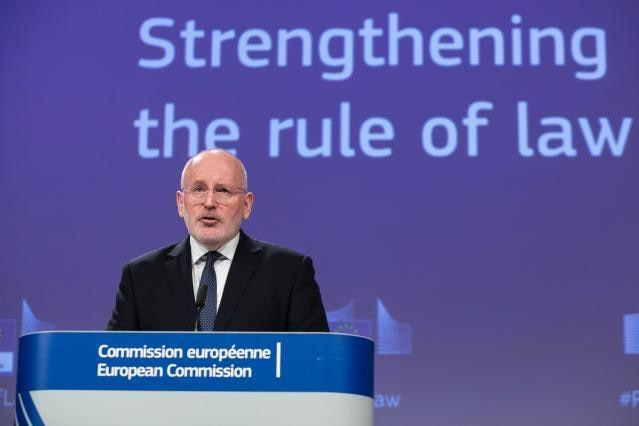
The European Commission has escalated a long-running fight over fisheries control, opening infringement procedures against Italy and Portugal in its July enforcement package. Both governments received letters of formal notice for failing to meet obligations under the Fisheries Control Regulation, the rulebook that lets Brussels verify whether catches at sea match the figures landed on shore.

Italy drew the sharper rebuke. Officials in the capital said a large share of the actions listed in Italy’s 2019 Control Action Plan still sit unfinished, spanning data validation, electronic reporting, engine power checks and the monitoring of sales notes. For the first time, the Commission is pursuing a member state for ignoring commitments written directly into such a plan. Investigators also complained that Rome has repeatedly withheld information, breaching the principle of sincere cooperation that binds national authorities to the EU executive.

Portugal’s case reaches back even further. The Control Regulation required Lisbon to build an automated system for cross-checking and validating fisheries data, backed by an electronic database, by December 2013. More than a decade later, that system remains unfinished. Without it, inspectors cannot reliably spot the gaps and errors that let over-quota fishing slip through unnoticed.

The stakes stretch well beyond paperwork. Reliable catch data underpins the quotas that ministers negotiate each December, and it anchors the scientific advice that decides how hard fleets can push stocks in the Mediterranean, the Atlantic and the North Sea. When one country’s numbers cannot be trusted, the whole common pond suffers, and fishers who play by the rules lose out to those who do not.

Brussels frames the move as part of a wider push to modernise enforcement after the 2023 overhaul of the control rules, which brought in mandatory vessel tracking and tighter margins on weighing catches. The Commission has published its reasoning through its July infringements package, and the control regulation sets out the obligations both states now stand accused of neglecting.

Italy and Portugal have two months to answer and to fix the shortcomings. If their replies fall short, the Commission can issue a reasoned opinion, the next rung on a ladder that ends at the Court of Justice and, potentially, financial penalties. Neither government wants to reach that point during a season when coastal communities already feel squeezed by fuel costs and shrinking quotas.

The timing also lands as the Commission consults on simplifying the European Maritime, Fisheries and Aquaculture Fund, the pot that helps pay for the very monitoring tools both countries have struggled to deploy. Officials insist enforcement and support go together: money flows more easily to fleets that can prove their catches are honest. For Rome and Lisbon, the message from the July package is blunt. The grace period for half-built control systems has run out.