August 10, 2026
LATEST
Five Joint Defence Projects Launch Europe’s Military ShieldElectrification Plan Aims to Make Europe First Electro ContinentHorizon Europe Budget Fight Heats Up as Ministers Push BackGoogle’s DMA Fine Sets Off a Transatlantic Tariff ClashTwenty New University Alliances Join Erasmus for Two YearsForeign Subsidies Case Puts Temu in the EU’s SightsVan Tachographs Now Mandatory for Cross-Border FleetsStress Test Exposes Gaps in Euro Area Bank DefencesEurope Bets on a Gulf Partnership Before the Riyadh SummitWhy the Atlantic Route Now Runs Through MauritaniaKyiv and Chisinau Advance as the EU Accession Talks Gather PaceEurope’s New Digital Border System Beds In After a Rocky RolloutBrussels Mounts Its Largest Wildfire Response as the Fires SpreadRetail Spending Slipped in June, Wrong-Footing EconomistsHeatwave Warning Puts Brussels on Alert for Vulnerable GroupsKANAL’s 230 Million Euro Museum Sets a November Opening DatePension Savings Rules Get a Reset as the EU Scraps the 1% CapMedicine Shortages Move to the Heart of Europe’s Pharma ResetJapan Becomes Europe’s Closest Security Partner in AsiaCan Europe’s New Zealand Deal Anchor It in the Pacific?Five Joint Defence Projects Launch Europe’s Military ShieldElectrification Plan Aims to Make Europe First Electro ContinentHorizon Europe Budget Fight Heats Up as Ministers Push BackGoogle’s DMA Fine Sets Off a Transatlantic Tariff ClashTwenty New University Alliances Join Erasmus for Two YearsForeign Subsidies Case Puts Temu in the EU’s SightsVan Tachographs Now Mandatory for Cross-Border FleetsStress Test Exposes Gaps in Euro Area Bank DefencesEurope Bets on a Gulf Partnership Before the Riyadh SummitWhy the Atlantic Route Now Runs Through MauritaniaKyiv and Chisinau Advance as the EU Accession Talks Gather PaceEurope’s New Digital Border System Beds In After a Rocky RolloutBrussels Mounts Its Largest Wildfire Response as the Fires SpreadRetail Spending Slipped in June, Wrong-Footing EconomistsHeatwave Warning Puts Brussels on Alert for Vulnerable GroupsKANAL’s 230 Million Euro Museum Sets a November Opening DatePension Savings Rules Get a Reset as the EU Scraps the 1% CapMedicine Shortages Move to the Heart of Europe’s Pharma ResetJapan Becomes Europe’s Closest Security Partner in AsiaCan Europe’s New Zealand Deal Anchor It in the Pacific?
August 10, 2026
LATEST
Five Joint Defence Projects Launch Europe’s Military ShieldElectrification Plan Aims to Make Europe First Electro ContinentHorizon Europe Budget Fight Heats Up as Ministers Push BackGoogle’s DMA Fine Sets Off a Transatlantic Tariff ClashTwenty New University Alliances Join Erasmus for Two YearsForeign Subsidies Case Puts Temu in the EU’s SightsVan Tachographs Now Mandatory for Cross-Border FleetsStress Test Exposes Gaps in Euro Area Bank DefencesEurope Bets on a Gulf Partnership Before the Riyadh SummitWhy the Atlantic Route Now Runs Through MauritaniaKyiv and Chisinau Advance as the EU Accession Talks Gather PaceEurope’s New Digital Border System Beds In After a Rocky RolloutBrussels Mounts Its Largest Wildfire Response as the Fires SpreadRetail Spending Slipped in June, Wrong-Footing EconomistsHeatwave Warning Puts Brussels on Alert for Vulnerable GroupsKANAL’s 230 Million Euro Museum Sets a November Opening DatePension Savings Rules Get a Reset as the EU Scraps the 1% CapMedicine Shortages Move to the Heart of Europe’s Pharma ResetJapan Becomes Europe’s Closest Security Partner in AsiaCan Europe’s New Zealand Deal Anchor It in the Pacific?Five Joint Defence Projects Launch Europe’s Military ShieldElectrification Plan Aims to Make Europe First Electro ContinentHorizon Europe Budget Fight Heats Up as Ministers Push BackGoogle’s DMA Fine Sets Off a Transatlantic Tariff ClashTwenty New University Alliances Join Erasmus for Two YearsForeign Subsidies Case Puts Temu in the EU’s SightsVan Tachographs Now Mandatory for Cross-Border FleetsStress Test Exposes Gaps in Euro Area Bank DefencesEurope Bets on a Gulf Partnership Before the Riyadh SummitWhy the Atlantic Route Now Runs Through MauritaniaKyiv and Chisinau Advance as the EU Accession Talks Gather PaceEurope’s New Digital Border System Beds In After a Rocky RolloutBrussels Mounts Its Largest Wildfire Response as the Fires SpreadRetail Spending Slipped in June, Wrong-Footing EconomistsHeatwave Warning Puts Brussels on Alert for Vulnerable GroupsKANAL’s 230 Million Euro Museum Sets a November Opening DatePension Savings Rules Get a Reset as the EU Scraps the 1% CapMedicine Shortages Move to the Heart of Europe’s Pharma ResetJapan Becomes Europe’s Closest Security Partner in AsiaCan Europe’s New Zealand Deal Anchor It in the Pacific?

Why Mongolia’s Rare Earths Now Matter More to Europe Than Ever

Ulaanbaatar: Mongolia sits on some of the world’s most coveted deposits of rare earths, and Europe is paying closer attention than at any point in their modern relationship.

The reason is strategic rather than sentimental. China refines the overwhelming share of the world’s rare earth elements, the metals that power wind turbines, electric motors, missiles and smartphones, and Beijing has shown that it will use that dominance as leverage. Every export restriction it announces sends European industry hunting for alternatives, and Mongolia keeps appearing near the top of the list.

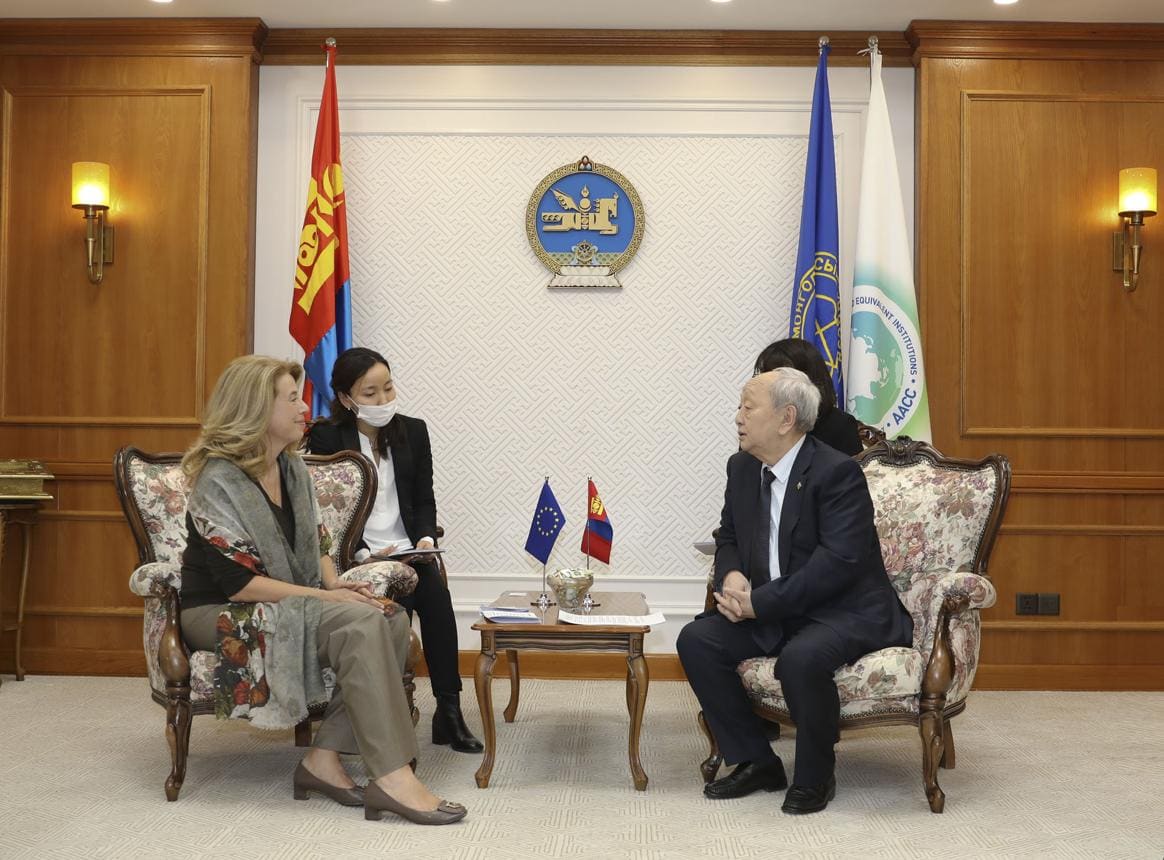
Landlocked between China and Russia, Mongolia has spent years cultivating what its diplomats call a “third neighbour” policy, a deliberate effort to build ties with distant democracies so that it never depends wholly on the two giants that surround it. The European Union, with its Critical Raw Materials Act and its open search for partners that share its values, fits that ambition almost perfectly.

The legal scaffolding already exists. A Partnership and Cooperation Agreement between Brussels and Ulaanbaatar has been in force since 2017, giving the two sides a framework to widen cooperation into minerals. What remains is to turn that framework into concrete supply, and here the obstacles are stubborn.

Mongolia has no route to a seaport that avoids Chinese or Russian territory. A tonne of Mongolian rare earth oxide cannot reach Rotterdam without the goodwill of at least one of the very powers Europe is trying to work around. That single fact of geography shadows every optimistic memorandum, and it explains why Mongolia has signed cooperation deals with the United States, France, South Korea and Britain yet still exports very little processed metal.

Ulaanbaatar also lacks the refining capacity that turns raw ore into the high-purity materials factories actually buy. Mining is only the first step; separation and refining are the expensive, technically demanding stages that China mastered over decades. Any serious European partnership would have to fund that missing middle, not simply sign an offtake contract and hope for the best.

None of this makes the courtship pointless. For Brussels, even a modest but reliable stream of Mongolian supply would loosen China’s grip at the margin and give European negotiators something to cite when Beijing next reaches for the export lever. For Mongolia, European money and technology promise a way to monetise its geology without handing yet more control to its neighbours.

The harder question is whether Europe can move at the speed the moment demands. The bloc excels at frameworks and declarations; it moves slowly on the patient, capital-heavy business of building mines and refineries abroad. Rivals are not waiting. South Korea, Japan and the United States all court the same deposits, and Mongolian officials now weigh competing offers with care.

For now the relationship remains more promise than pipeline. Yet in a decade defined by contests over critical minerals, a democratic supplier wedged between two rivals has become a prize worth pursuing, and Europe has decided it cannot afford to let others pursue it alone.