August 10, 2026
LATEST
Five Joint Defence Projects Launch Europe’s Military ShieldElectrification Plan Aims to Make Europe First Electro ContinentHorizon Europe Budget Fight Heats Up as Ministers Push BackGoogle’s DMA Fine Sets Off a Transatlantic Tariff ClashTwenty New University Alliances Join Erasmus for Two YearsForeign Subsidies Case Puts Temu in the EU’s SightsVan Tachographs Now Mandatory for Cross-Border FleetsStress Test Exposes Gaps in Euro Area Bank DefencesEurope Bets on a Gulf Partnership Before the Riyadh SummitWhy the Atlantic Route Now Runs Through MauritaniaKyiv and Chisinau Advance as the EU Accession Talks Gather PaceEurope’s New Digital Border System Beds In After a Rocky RolloutBrussels Mounts Its Largest Wildfire Response as the Fires SpreadRetail Spending Slipped in June, Wrong-Footing EconomistsHeatwave Warning Puts Brussels on Alert for Vulnerable GroupsKANAL’s 230 Million Euro Museum Sets a November Opening DatePension Savings Rules Get a Reset as the EU Scraps the 1% CapMedicine Shortages Move to the Heart of Europe’s Pharma ResetJapan Becomes Europe’s Closest Security Partner in AsiaCan Europe’s New Zealand Deal Anchor It in the Pacific?Five Joint Defence Projects Launch Europe’s Military ShieldElectrification Plan Aims to Make Europe First Electro ContinentHorizon Europe Budget Fight Heats Up as Ministers Push BackGoogle’s DMA Fine Sets Off a Transatlantic Tariff ClashTwenty New University Alliances Join Erasmus for Two YearsForeign Subsidies Case Puts Temu in the EU’s SightsVan Tachographs Now Mandatory for Cross-Border FleetsStress Test Exposes Gaps in Euro Area Bank DefencesEurope Bets on a Gulf Partnership Before the Riyadh SummitWhy the Atlantic Route Now Runs Through MauritaniaKyiv and Chisinau Advance as the EU Accession Talks Gather PaceEurope’s New Digital Border System Beds In After a Rocky RolloutBrussels Mounts Its Largest Wildfire Response as the Fires SpreadRetail Spending Slipped in June, Wrong-Footing EconomistsHeatwave Warning Puts Brussels on Alert for Vulnerable GroupsKANAL’s 230 Million Euro Museum Sets a November Opening DatePension Savings Rules Get a Reset as the EU Scraps the 1% CapMedicine Shortages Move to the Heart of Europe’s Pharma ResetJapan Becomes Europe’s Closest Security Partner in AsiaCan Europe’s New Zealand Deal Anchor It in the Pacific?
August 10, 2026
LATEST
Five Joint Defence Projects Launch Europe’s Military ShieldElectrification Plan Aims to Make Europe First Electro ContinentHorizon Europe Budget Fight Heats Up as Ministers Push BackGoogle’s DMA Fine Sets Off a Transatlantic Tariff ClashTwenty New University Alliances Join Erasmus for Two YearsForeign Subsidies Case Puts Temu in the EU’s SightsVan Tachographs Now Mandatory for Cross-Border FleetsStress Test Exposes Gaps in Euro Area Bank DefencesEurope Bets on a Gulf Partnership Before the Riyadh SummitWhy the Atlantic Route Now Runs Through MauritaniaKyiv and Chisinau Advance as the EU Accession Talks Gather PaceEurope’s New Digital Border System Beds In After a Rocky RolloutBrussels Mounts Its Largest Wildfire Response as the Fires SpreadRetail Spending Slipped in June, Wrong-Footing EconomistsHeatwave Warning Puts Brussels on Alert for Vulnerable GroupsKANAL’s 230 Million Euro Museum Sets a November Opening DatePension Savings Rules Get a Reset as the EU Scraps the 1% CapMedicine Shortages Move to the Heart of Europe’s Pharma ResetJapan Becomes Europe’s Closest Security Partner in AsiaCan Europe’s New Zealand Deal Anchor It in the Pacific?Five Joint Defence Projects Launch Europe’s Military ShieldElectrification Plan Aims to Make Europe First Electro ContinentHorizon Europe Budget Fight Heats Up as Ministers Push BackGoogle’s DMA Fine Sets Off a Transatlantic Tariff ClashTwenty New University Alliances Join Erasmus for Two YearsForeign Subsidies Case Puts Temu in the EU’s SightsVan Tachographs Now Mandatory for Cross-Border FleetsStress Test Exposes Gaps in Euro Area Bank DefencesEurope Bets on a Gulf Partnership Before the Riyadh SummitWhy the Atlantic Route Now Runs Through MauritaniaKyiv and Chisinau Advance as the EU Accession Talks Gather PaceEurope’s New Digital Border System Beds In After a Rocky RolloutBrussels Mounts Its Largest Wildfire Response as the Fires SpreadRetail Spending Slipped in June, Wrong-Footing EconomistsHeatwave Warning Puts Brussels on Alert for Vulnerable GroupsKANAL’s 230 Million Euro Museum Sets a November Opening DatePension Savings Rules Get a Reset as the EU Scraps the 1% CapMedicine Shortages Move to the Heart of Europe’s Pharma ResetJapan Becomes Europe’s Closest Security Partner in AsiaCan Europe’s New Zealand Deal Anchor It in the Pacific?

Electronic Waste Rules Head for an Overhaul Under a Circular Act

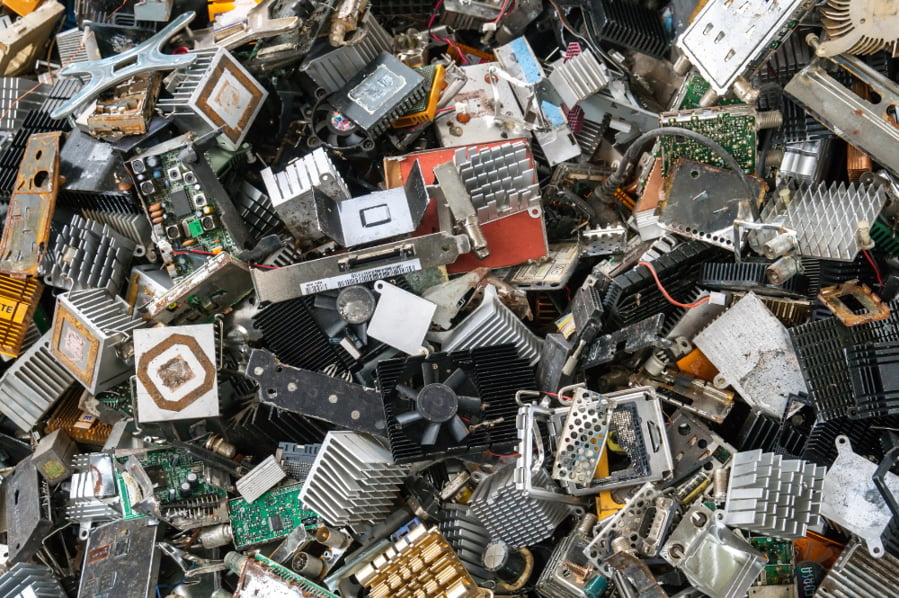
Aarhus: In this Danish city that has built part of its identity on recycling and reuse, the numbers behind Europe’s electronic waste problem still sting. Nearly half of all the discarded gadgets, cables and appliances generated across the Union never reach an official collection point, and the European Commission has decided the rules governing them need a rewrite.

The trigger is a Commission evaluation of the Waste Electrical and Electronic Equipment Directive, the law that is supposed to make sure old phones, laptops and washing machines are gathered, dismantled and fed back into the economy. The assessment found the directive falling short on almost every front. Collection lags well behind target, recycling trails collection, and vast quantities of valuable metal simply vanish into drawers, landfill or illegal export.

Those findings will feed directly into the Commission’s upcoming Circular Economy Act, a flagship measure due this year that aims to build a genuine single market for secondary raw materials. The logic is blunt. Europe imports the copper, cobalt and rare earths its factories crave, yet throws away the same metals every time a broken charger goes in the bin. Capturing that stream would cut dependence on distant suppliers and hand recyclers a steadier flow of feedstock.

The revised e-waste rules are expected to tighten collection duties, sharpen the responsibility producers bear for the products they sell and push for designs that make recovery easier. The Commission has signalled a consultation to shape the detail, and industry already senses that targets will climb. Details of the wider agenda sit on the Commission’s circular economy pages.

Producers face the sharpest adjustment. Extended producer responsibility, the principle that whoever puts a device on the market helps pay to collect and recycle it, already underpins the current directive. A stronger version would raise the financial stakes and could reward companies that build repairable, long-lived hardware while penalising throwaway design.

The batteries that power much of that hardware already offer a template. Since 2024 a dedicated Battery Regulation has forced stricter safety and environmental standards, easier consumer returns and durability rules across the bloc. Officials point to it as proof that tighter obligations can reshape a whole product category rather than merely nudge it.

Recyclers welcome the direction but urge realism. Uncollected devices, they note, cannot be recycled at any price, so the first battle is getting more equipment out of homes and into the system. Convenient drop-off, they argue, matters as much as any recycling quota.

For a city like Aarhus, where separate collection is routine and residents expect their waste to have a second life, the coming overhaul is less a shock than a catch-up. The harder question is whether the rest of the Union can lift its collection rate fast enough to turn Europe’s mountain of discarded electronics into the resource the Commission insists it can be.