August 10, 2026
LATEST
Five Joint Defence Projects Launch Europe’s Military ShieldElectrification Plan Aims to Make Europe First Electro ContinentHorizon Europe Budget Fight Heats Up as Ministers Push BackGoogle’s DMA Fine Sets Off a Transatlantic Tariff ClashTwenty New University Alliances Join Erasmus for Two YearsForeign Subsidies Case Puts Temu in the EU’s SightsVan Tachographs Now Mandatory for Cross-Border FleetsStress Test Exposes Gaps in Euro Area Bank DefencesEurope Bets on a Gulf Partnership Before the Riyadh SummitWhy the Atlantic Route Now Runs Through MauritaniaKyiv and Chisinau Advance as the EU Accession Talks Gather PaceEurope’s New Digital Border System Beds In After a Rocky RolloutBrussels Mounts Its Largest Wildfire Response as the Fires SpreadRetail Spending Slipped in June, Wrong-Footing EconomistsHeatwave Warning Puts Brussels on Alert for Vulnerable GroupsKANAL’s 230 Million Euro Museum Sets a November Opening DatePension Savings Rules Get a Reset as the EU Scraps the 1% CapMedicine Shortages Move to the Heart of Europe’s Pharma ResetJapan Becomes Europe’s Closest Security Partner in AsiaCan Europe’s New Zealand Deal Anchor It in the Pacific?Five Joint Defence Projects Launch Europe’s Military ShieldElectrification Plan Aims to Make Europe First Electro ContinentHorizon Europe Budget Fight Heats Up as Ministers Push BackGoogle’s DMA Fine Sets Off a Transatlantic Tariff ClashTwenty New University Alliances Join Erasmus for Two YearsForeign Subsidies Case Puts Temu in the EU’s SightsVan Tachographs Now Mandatory for Cross-Border FleetsStress Test Exposes Gaps in Euro Area Bank DefencesEurope Bets on a Gulf Partnership Before the Riyadh SummitWhy the Atlantic Route Now Runs Through MauritaniaKyiv and Chisinau Advance as the EU Accession Talks Gather PaceEurope’s New Digital Border System Beds In After a Rocky RolloutBrussels Mounts Its Largest Wildfire Response as the Fires SpreadRetail Spending Slipped in June, Wrong-Footing EconomistsHeatwave Warning Puts Brussels on Alert for Vulnerable GroupsKANAL’s 230 Million Euro Museum Sets a November Opening DatePension Savings Rules Get a Reset as the EU Scraps the 1% CapMedicine Shortages Move to the Heart of Europe’s Pharma ResetJapan Becomes Europe’s Closest Security Partner in AsiaCan Europe’s New Zealand Deal Anchor It in the Pacific?
August 10, 2026
LATEST
Five Joint Defence Projects Launch Europe’s Military ShieldElectrification Plan Aims to Make Europe First Electro ContinentHorizon Europe Budget Fight Heats Up as Ministers Push BackGoogle’s DMA Fine Sets Off a Transatlantic Tariff ClashTwenty New University Alliances Join Erasmus for Two YearsForeign Subsidies Case Puts Temu in the EU’s SightsVan Tachographs Now Mandatory for Cross-Border FleetsStress Test Exposes Gaps in Euro Area Bank DefencesEurope Bets on a Gulf Partnership Before the Riyadh SummitWhy the Atlantic Route Now Runs Through MauritaniaKyiv and Chisinau Advance as the EU Accession Talks Gather PaceEurope’s New Digital Border System Beds In After a Rocky RolloutBrussels Mounts Its Largest Wildfire Response as the Fires SpreadRetail Spending Slipped in June, Wrong-Footing EconomistsHeatwave Warning Puts Brussels on Alert for Vulnerable GroupsKANAL’s 230 Million Euro Museum Sets a November Opening DatePension Savings Rules Get a Reset as the EU Scraps the 1% CapMedicine Shortages Move to the Heart of Europe’s Pharma ResetJapan Becomes Europe’s Closest Security Partner in AsiaCan Europe’s New Zealand Deal Anchor It in the Pacific?Five Joint Defence Projects Launch Europe’s Military ShieldElectrification Plan Aims to Make Europe First Electro ContinentHorizon Europe Budget Fight Heats Up as Ministers Push BackGoogle’s DMA Fine Sets Off a Transatlantic Tariff ClashTwenty New University Alliances Join Erasmus for Two YearsForeign Subsidies Case Puts Temu in the EU’s SightsVan Tachographs Now Mandatory for Cross-Border FleetsStress Test Exposes Gaps in Euro Area Bank DefencesEurope Bets on a Gulf Partnership Before the Riyadh SummitWhy the Atlantic Route Now Runs Through MauritaniaKyiv and Chisinau Advance as the EU Accession Talks Gather PaceEurope’s New Digital Border System Beds In After a Rocky RolloutBrussels Mounts Its Largest Wildfire Response as the Fires SpreadRetail Spending Slipped in June, Wrong-Footing EconomistsHeatwave Warning Puts Brussels on Alert for Vulnerable GroupsKANAL’s 230 Million Euro Museum Sets a November Opening DatePension Savings Rules Get a Reset as the EU Scraps the 1% CapMedicine Shortages Move to the Heart of Europe’s Pharma ResetJapan Becomes Europe’s Closest Security Partner in AsiaCan Europe’s New Zealand Deal Anchor It in the Pacific?

BEFIT File Stalls Under Unanimity Lock As 2028 Trigger Slips

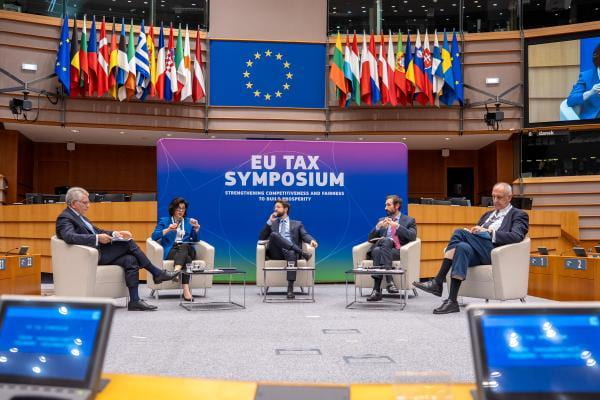
Maastricht: The tax policy unit at the Dutch finance ministry has formally acknowledged in a working paper circulated to coalition partners that the Business in Europe Framework for Income Taxation proposal will not advance during the current Council half-year, marking a third consecutive presidency that has logged technical discussions without operational progress. The acknowledgement matters because the proposal’s projected 1 July 2028 entry into force would require political agreement during the Belgian presidency that begins in January 2027 at the latest if the implementing window is to be respected.

BEFIT was tabled by the Commission in September 2023 as the cornerstone of a wider package designed to simplify corporate taxation for large groups operating across the union. The proposal would create a common methodology to compute the aggregated tax base for BEFIT groups, applying mandatorily to enterprises with combined annual revenue of at least 750 million euro and optionally to smaller groups that elect into the regime. Building on the OECD Pillar Two architecture, BEFIT seeks to align the EU’s domestic corporate tax framework with the global minimum tax floor without duplicating the compliance burden firms have already absorbed under Directive 2022/2523.

Unanimity in the Council is the single largest obstacle. Tax files require all 27 member states to agree, a threshold that has historically delivered slow progress on cross-border corporate tax instruments and has produced repeated stand-offs over base allocation, depreciation rules and the treatment of branch profits. Technical talks during the Hungarian presidency in late 2024 produced narrowed positions on the timing of depreciation reliefs and on aggregating tax bases, but the Polish and Danish presidencies in 2025 were absorbed by competing priorities including the Pillar Two implementation review and the digital services tax aftermath.

The Dutch working paper identifies three blocking clusters at technical level. First, member states with sub-standard nominal corporate rates argue the proposed allocation key risks shifting revenue away from them under the temporary transitional formula. Second, several states question the interaction between BEFIT’s loss carry-forward rules and existing national group consolidation regimes, especially in cases where current frameworks already permit horizontal loss offsetting. Third, smaller member states have flagged administrative capacity questions about running BEFIT alongside Pillar Two reporting, with the additional electronic filing requirements anticipated under the proposed framework requiring substantial IT investment.

The Commission’s 2026 work programme, published last October, signals that the executive intends to keep BEFIT in active negotiation throughout the calendar year but does not propose a fundamental redesign. That contrasts with the approach taken for the Unshell directive, which the Commission acknowledged needed a partial rewrite after sustained Council resistance and which is now expected to re-emerge with revised scope before the summer recess. BEFIT advocates inside DG TAXUD have argued that further structural changes would set back the proposal’s prospects rather than improve them.

For the practitioner community the stall has practical consequences. Tax directors at multinational groups have already invested in compliance systems oriented toward Pillar Two and the existing patchwork of national rules. A BEFIT delay extends the lifespan of those investments but means firms cannot plan for the consolidation savings the Commission promised when it tabled the proposal. The Confederation of European Business has urged the Council to either bring BEFIT to operational agreement in 2026 or formally acknowledge that the proposal needs a longer horizon, citing the deadweight cost of repeated technical revisions that may not translate into adopted law.

Looking beyond BEFIT, the broader question is whether the unanimity rule on tax files has reached the limit of what it can credibly deliver. The Spanish presidency in late 2023 floated formal use of the enhanced cooperation procedure as a fallback for tax integration, and the political appetite for that approach has not faded among the larger member states. Should BEFIT remain blocked through the autumn, that institutional question will return to the agenda with renewed force, with consequences that reach well beyond a single corporate tax file.