August 10, 2026
LATEST
Five Joint Defence Projects Launch Europe’s Military ShieldElectrification Plan Aims to Make Europe First Electro ContinentHorizon Europe Budget Fight Heats Up as Ministers Push BackGoogle’s DMA Fine Sets Off a Transatlantic Tariff ClashTwenty New University Alliances Join Erasmus for Two YearsForeign Subsidies Case Puts Temu in the EU’s SightsVan Tachographs Now Mandatory for Cross-Border FleetsStress Test Exposes Gaps in Euro Area Bank DefencesEurope Bets on a Gulf Partnership Before the Riyadh SummitWhy the Atlantic Route Now Runs Through MauritaniaKyiv and Chisinau Advance as the EU Accession Talks Gather PaceEurope’s New Digital Border System Beds In After a Rocky RolloutBrussels Mounts Its Largest Wildfire Response as the Fires SpreadRetail Spending Slipped in June, Wrong-Footing EconomistsHeatwave Warning Puts Brussels on Alert for Vulnerable GroupsKANAL’s 230 Million Euro Museum Sets a November Opening DatePension Savings Rules Get a Reset as the EU Scraps the 1% CapMedicine Shortages Move to the Heart of Europe’s Pharma ResetJapan Becomes Europe’s Closest Security Partner in AsiaCan Europe’s New Zealand Deal Anchor It in the Pacific?Five Joint Defence Projects Launch Europe’s Military ShieldElectrification Plan Aims to Make Europe First Electro ContinentHorizon Europe Budget Fight Heats Up as Ministers Push BackGoogle’s DMA Fine Sets Off a Transatlantic Tariff ClashTwenty New University Alliances Join Erasmus for Two YearsForeign Subsidies Case Puts Temu in the EU’s SightsVan Tachographs Now Mandatory for Cross-Border FleetsStress Test Exposes Gaps in Euro Area Bank DefencesEurope Bets on a Gulf Partnership Before the Riyadh SummitWhy the Atlantic Route Now Runs Through MauritaniaKyiv and Chisinau Advance as the EU Accession Talks Gather PaceEurope’s New Digital Border System Beds In After a Rocky RolloutBrussels Mounts Its Largest Wildfire Response as the Fires SpreadRetail Spending Slipped in June, Wrong-Footing EconomistsHeatwave Warning Puts Brussels on Alert for Vulnerable GroupsKANAL’s 230 Million Euro Museum Sets a November Opening DatePension Savings Rules Get a Reset as the EU Scraps the 1% CapMedicine Shortages Move to the Heart of Europe’s Pharma ResetJapan Becomes Europe’s Closest Security Partner in AsiaCan Europe’s New Zealand Deal Anchor It in the Pacific?
August 10, 2026
LATEST
Five Joint Defence Projects Launch Europe’s Military ShieldElectrification Plan Aims to Make Europe First Electro ContinentHorizon Europe Budget Fight Heats Up as Ministers Push BackGoogle’s DMA Fine Sets Off a Transatlantic Tariff ClashTwenty New University Alliances Join Erasmus for Two YearsForeign Subsidies Case Puts Temu in the EU’s SightsVan Tachographs Now Mandatory for Cross-Border FleetsStress Test Exposes Gaps in Euro Area Bank DefencesEurope Bets on a Gulf Partnership Before the Riyadh SummitWhy the Atlantic Route Now Runs Through MauritaniaKyiv and Chisinau Advance as the EU Accession Talks Gather PaceEurope’s New Digital Border System Beds In After a Rocky RolloutBrussels Mounts Its Largest Wildfire Response as the Fires SpreadRetail Spending Slipped in June, Wrong-Footing EconomistsHeatwave Warning Puts Brussels on Alert for Vulnerable GroupsKANAL’s 230 Million Euro Museum Sets a November Opening DatePension Savings Rules Get a Reset as the EU Scraps the 1% CapMedicine Shortages Move to the Heart of Europe’s Pharma ResetJapan Becomes Europe’s Closest Security Partner in AsiaCan Europe’s New Zealand Deal Anchor It in the Pacific?Five Joint Defence Projects Launch Europe’s Military ShieldElectrification Plan Aims to Make Europe First Electro ContinentHorizon Europe Budget Fight Heats Up as Ministers Push BackGoogle’s DMA Fine Sets Off a Transatlantic Tariff ClashTwenty New University Alliances Join Erasmus for Two YearsForeign Subsidies Case Puts Temu in the EU’s SightsVan Tachographs Now Mandatory for Cross-Border FleetsStress Test Exposes Gaps in Euro Area Bank DefencesEurope Bets on a Gulf Partnership Before the Riyadh SummitWhy the Atlantic Route Now Runs Through MauritaniaKyiv and Chisinau Advance as the EU Accession Talks Gather PaceEurope’s New Digital Border System Beds In After a Rocky RolloutBrussels Mounts Its Largest Wildfire Response as the Fires SpreadRetail Spending Slipped in June, Wrong-Footing EconomistsHeatwave Warning Puts Brussels on Alert for Vulnerable GroupsKANAL’s 230 Million Euro Museum Sets a November Opening DatePension Savings Rules Get a Reset as the EU Scraps the 1% CapMedicine Shortages Move to the Heart of Europe’s Pharma ResetJapan Becomes Europe’s Closest Security Partner in AsiaCan Europe’s New Zealand Deal Anchor It in the Pacific?

Counterfeit Truck Parts Expose A Half-Billion Euro Fraud Trail

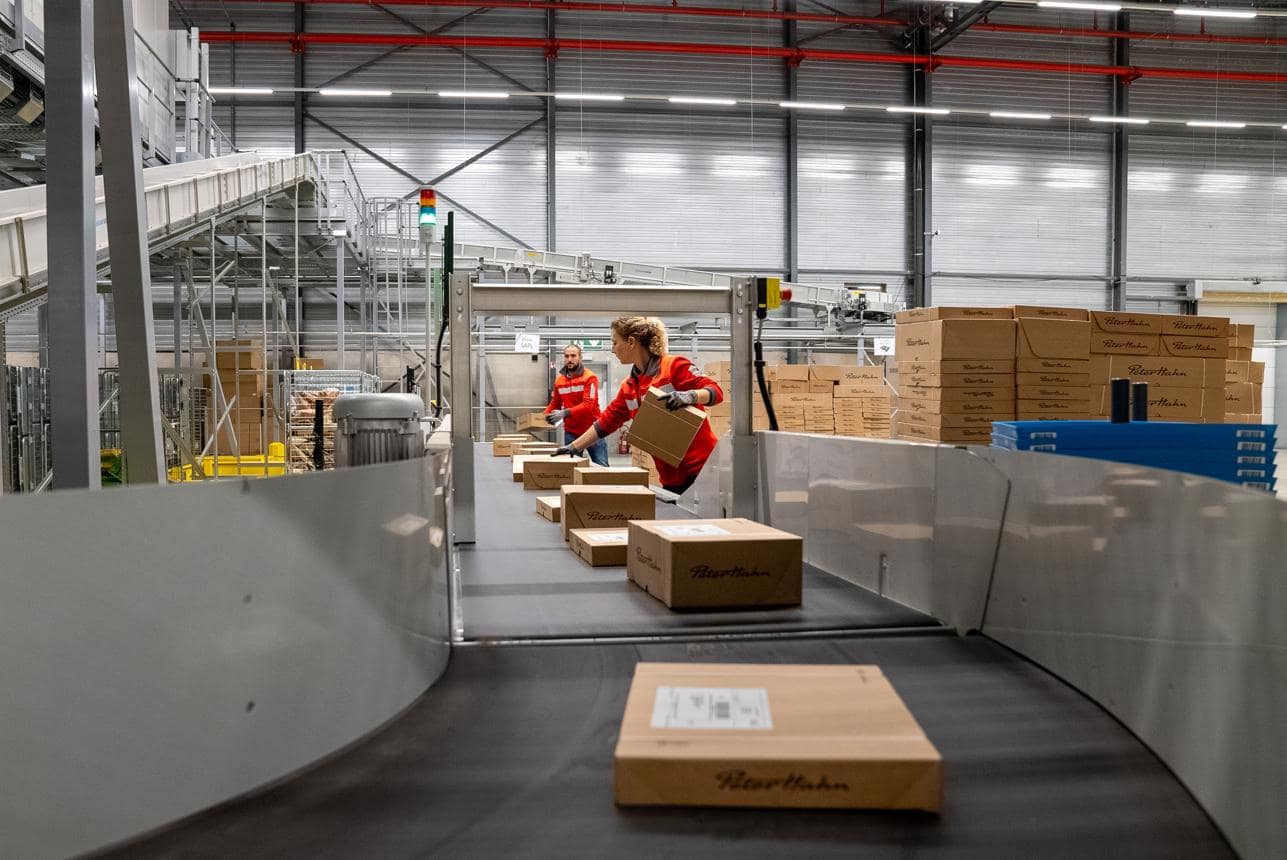
Lisbon: A shipment of fake brake pads and forged engine components stopped at a Portuguese depot in early June became the latest reminder that fraud against the European budget rarely announces itself in grand schemes. It arrives, instead, in pallets of counterfeit spare parts, padded farm invoices and shell companies built to harvest subsidies. The operation that broke the counterfeit truck-part network was coordinated by the European Anti-Fraud Office, the Commission’s investigative arm better known by its French acronym, OLAF, working alongside Portuguese customs to trace components that endangered road safety as much as they cheated rights-holders.

The seizure landed only weeks after OLAF published its annual report for 2025, a document that quantified the scale of the problem with unusual bluntness. Over the year the office recommended the recovery of close to six hundred million euro in misused or fraudulently obtained funds, while its interventions prevented a further eighteen million from being spent improperly. Investigators closed two hundred and nine cases and opened two hundred and fifty-four new ones, a churn that points less to a backlog cleared than to a pipeline that never empties.

What the numbers conceal is the granular, often unglamorous nature of the work. A recurring theme in recent files has been the misdirection of rural development money, where payments intended to modernise farms and sustain remote communities were rerouted through fictitious projects. Another is the circumvention of trade sanctions, where OLAF earlier this year helped untangle a network moving hundreds of transport vehicles in defiance of restrictive measures. The counterfeit-parts case sits at the intersection of customs fraud and consumer danger, a category that has grown as cheap imitations flood supply chains.

OLAF’s powers are administrative rather than judicial, a distinction that shapes both its reach and its frustrations. It can investigate, recommend recovery and refer matters to national prosecutors or to the European Public Prosecutor’s Office, but it cannot itself compel a member state to claw back a single euro. That gap between recommendation and recovery has long worried the European Court of Auditors, which has repeatedly noted that the headline figures OLAF reports are sums it believes should be returned, not sums that necessarily are. The actual recovery rate depends on national administrations whose appetite for pursuing politically awkward beneficiaries varies considerably.

The office has tried to compensate by sharpening its data tools and deepening cooperation with customs services, an approach the Portuguese case illustrates. By matching shipping manifests against patterns flagged in earlier investigations, investigators were able to single out a consignment that might otherwise have cleared the port without scrutiny. The method is becoming the norm rather than the exception, as OLAF leans on analytics to spot anomalies across millions of transactions.

For a budget that runs into the hundreds of billions, a recovery recommendation of six hundred million can look modest, even rounding-error small. Yet officials argue the deterrent value outstrips the cash figure. Every publicised seizure raises the perceived cost of defrauding the Union, and every referral to prosecutors signals that the administrative trail can end in a courtroom. Whether that signal is loud enough to change behaviour in the member states that matter most remains, as ever, an open question.