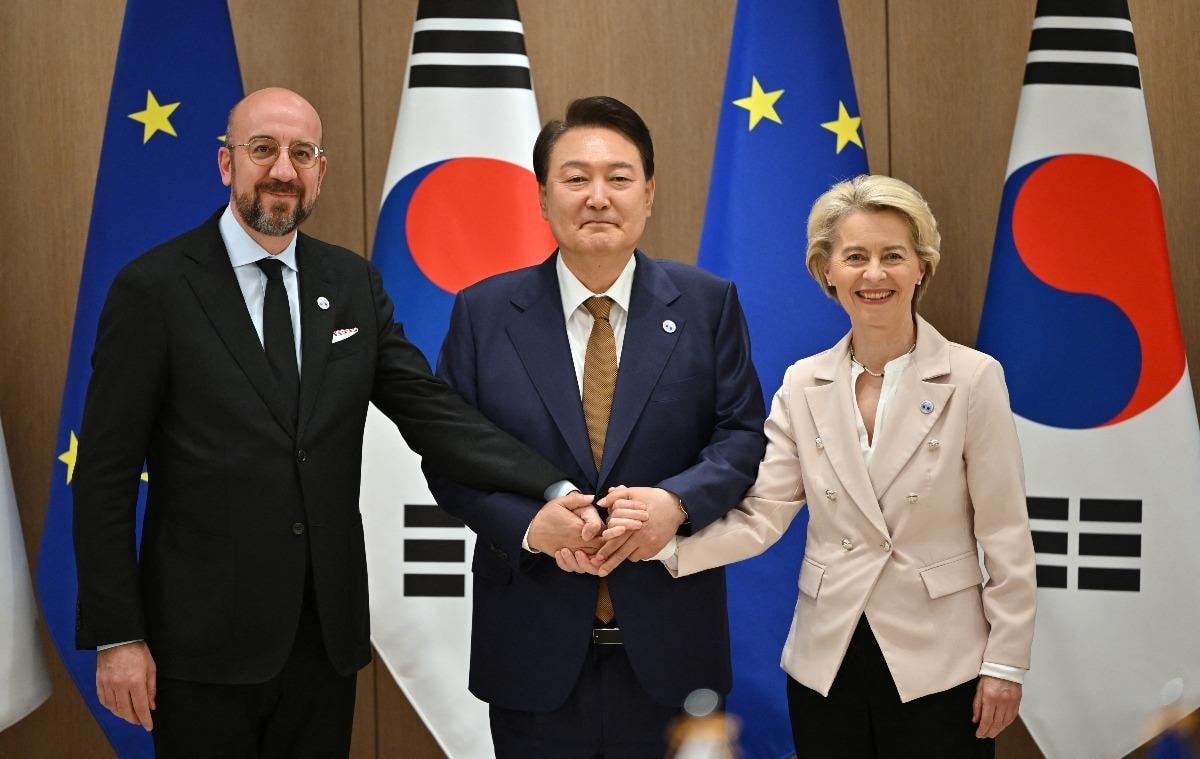
Brussels: The eleventh summit between the European Union and the Republic of Korea, convened in the Belgian capital on 10 June, is the kind of meeting that rarely produces headlines yet quietly reshapes how Europe positions itself in Asia. Antonio Costa and Ursula von der Leyen will host the South Korean president to take stock of three years of deepening ties and to sign a Digital Trade Agreement whose text was finalised in April. Behind the formal language lies a more consequential ambition: turning a relationship long defined by cars, ships and consumer electronics into a strategic alignment between two trading powers that increasingly distrust the global order around them.
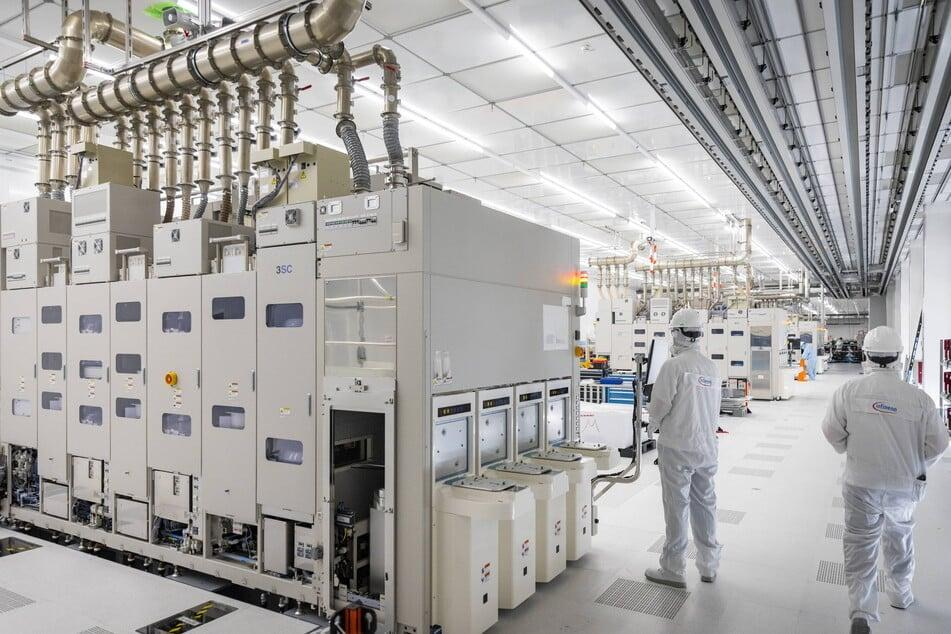
The numbers explain part of the pull. Two-way trade in goods passed 124 billion euros last year, making the EU Korea’s third-largest partner and Korea the bloc’s eighth. But raw volume is not why officials in Brussels have grown attentive. Korea sits at the centre of supply chains that Europe cannot easily replicate, from advanced memory chips to the battery cells that will determine whether the continent’s car industry survives the electric transition. A partner that manufactures what Europe needs, shares its anxieties about coercion, and harbours no territorial designs on the continent is a rare commodity.
The two sides describe their emerging framework as a Competitiveness Alliance, a phrase that captures the defensive instinct driving it. Both economies are squeezed between a protectionist United States and a China willing to weaponise its dominance of critical inputs. Pooling research, aligning standards and guaranteeing each other trusted access to data and components is less an act of ambition than of insurance. The Digital Trade Agreement, with its binding rules on data flows and consumer protection, is the first concrete expression of that logic.
Security is the quieter thread. The 2024 Security and Defence Partnership gave the relationship a hard edge that would have seemed implausible a decade ago, when Seoul guarded its strategic autonomy and Europe treated the Korean peninsula as a distant concern. North Korea’s deployment of troops and munitions to Russia changed the calculation. A war on Europe’s eastern flank is now materially connected to a regime on Korea’s northern border, and both capitals have concluded that their security theatres are no longer separable.
None of this makes the partnership frictionless. Korea runs a sizeable surplus with the EU, and European carmakers have not forgotten how quickly Korean rivals captured market share after the 2011 free trade deal. Seoul, for its part, watches Europe’s regulatory zeal with unease, wary that the bloc’s digital and sustainability rules could become barriers dressed as standards. The summit will paper over these tensions rather than resolve them.
What the meeting signals, though, is a maturing of European strategy. For years the EU spoke of an Indo-Pacific tilt while struggling to show what it meant in practice. Building a dense, institutionalised partnership with a fellow democracy that combines technological heft with genuine strategic stakes is the most credible answer it has produced. The communique will be forgotten within a week. The architecture it advances will outlast it.