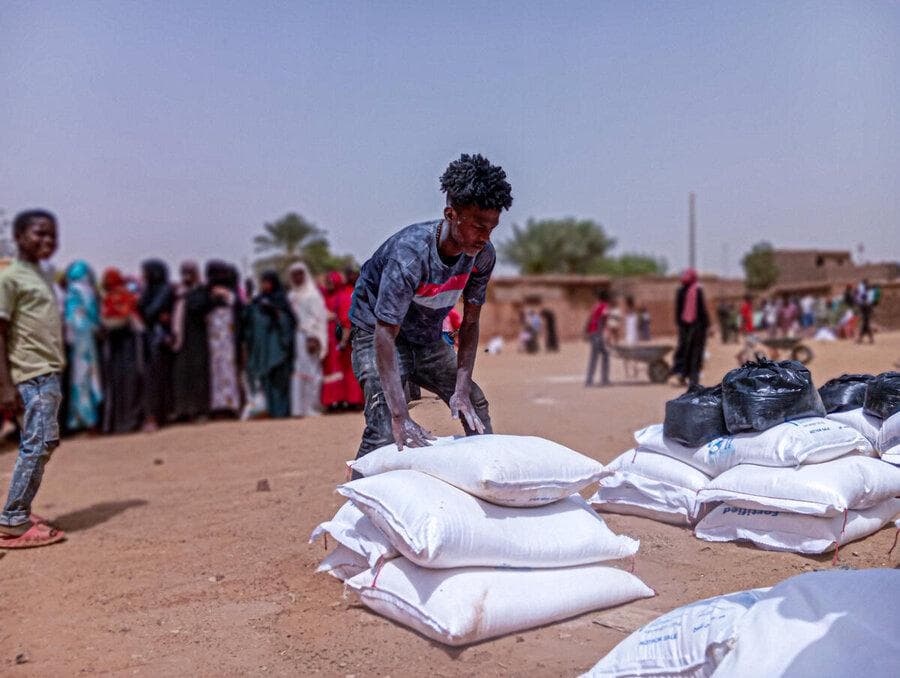
Port Sudan: The numbers attached to Sudan’s catastrophe have grown so large that they have begun to lose their meaning. The World Food Programme counts 24.6 million people in acute hunger, two million at or near famine, and 33.7 million who will need humanitarian assistance this year. Against that backdrop, the European Union and its member states arrived at the Third International Sudan Conference in Berlin in April with a pledge of more than 812 million euros. The figure is substantial. It is also, on its own, almost beside the point.
The European Commission’s share of that pledge is 360.8 million euros, of which 215.5 million is meant for people inside Sudan and 145.3 million for the refugees the war has pushed into Chad, South Sudan, Ethiopia, the Central African Republic, Uganda, Egypt and Libya. Brussels has now committed roughly 276 million euros to the Sudan response in 2026 alone, part of more than a billion euros disbursed since 2013. By the cold arithmetic of donor conferences, Europe is doing its part.
The problem is that money is not the binding constraint. Sudan’s famine is engineered, not incidental. United Nations investigators have concluded that the Rapid Support Forces used starvation as a method of warfare, a war crime, during the long siege of El Fasher, which fell to the group last autumn after eighteen months of blockade, shelling and drone attacks. The UN human rights office has confirmed thousands of killings in the city. Where aid is most needed, armed men have made a deliberate strategy of keeping it out.
This is the uncomfortable truth that pledging conferences are designed to obscure. A donor can announce a number from a podium in Berlin and generate a headline, a photograph and a sense of having acted. It cannot, by writing a cheque, open a road that a militia has closed, secure a convoy that a checkpoint will loot, or compel either side to honour the truce plans that the war keeps outpacing. The gap between euros pledged and assistance delivered is where Sudanese civilians are dying.
Europe’s instinct, honed over years of crises in Syria, Yemen and the Sahel, is to treat humanitarian generosity as a substitute for political engagement. It is easier to fund a refugee camp in Chad than to confront the foreign governments arming the belligerents, or to spend diplomatic capital on a war that commands little attention in European capitals preoccupied with their own borders. Aid becomes a way of managing guilt rather than ending suffering.
None of this argues for giving less. The 162 million euros the EU has allocated for lifesaving assistance will keep people alive who would otherwise die, and the refugee-hosting states straining under the influx have a genuine claim on European solidarity. But humanitarian funding without diplomatic pressure is a half-measure that lets the architects of famine continue with impunity. If Europe wants its money to mean something, it will have to be as forceful about access and accountability as it is about pledges, and to name the outside powers fuelling a war it would prefer to treat as a distant tragedy. Otherwise the conferences will keep producing ever larger numbers for a crisis that only deepens.