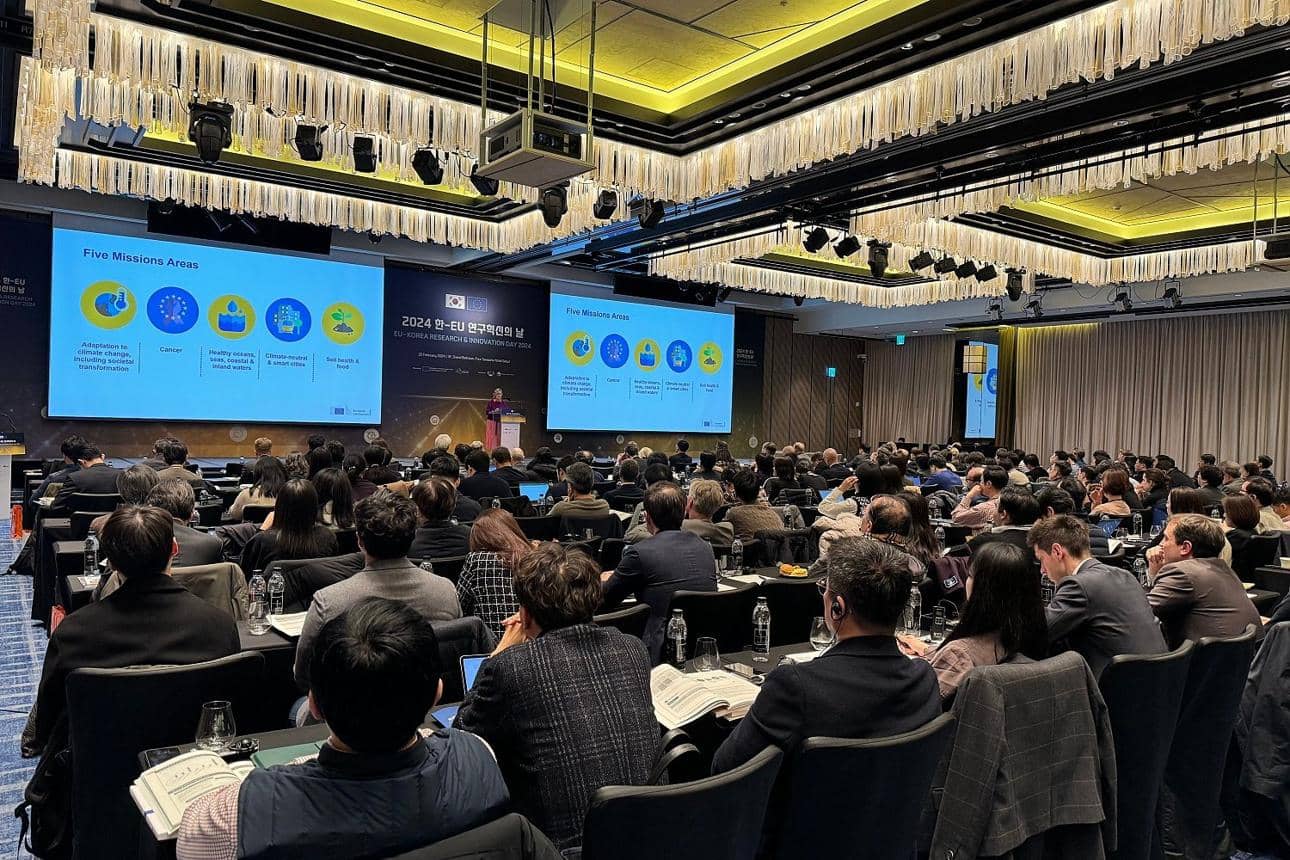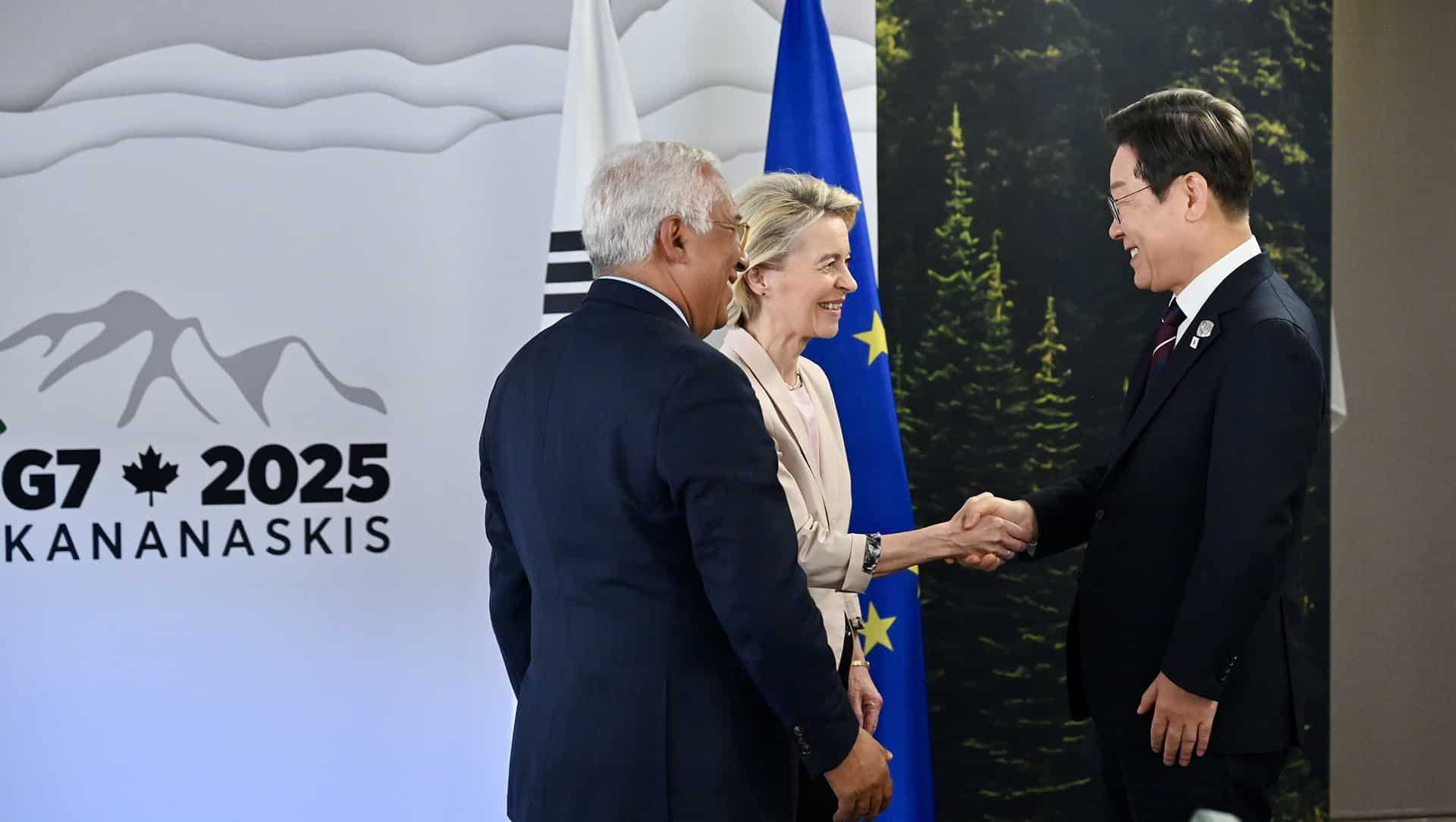
Brussels: South Korea has spent years as Europe’s quiet success story in Asia, a free-trade partner since 2011 and a fellow manufacturing power with little of the friction that complicates ties with larger neighbours. In 2026 that relationship is being upgraded from commerce to something more strategic, and the clearest sign is a digital trade agreement whose final text both sides have approved and expect to sign around their summit.
The Digital Trade Agreement is less glamorous than a tariff deal but arguably more consequential. It sets binding rules for cross-border data flows, consumer protection and legal certainty for firms operating online, and it singles out reliable data sharing for research. In an economy where value increasingly lives in information rather than goods, agreeing on how that information may move is the modern equivalent of agreeing on shipping lanes.
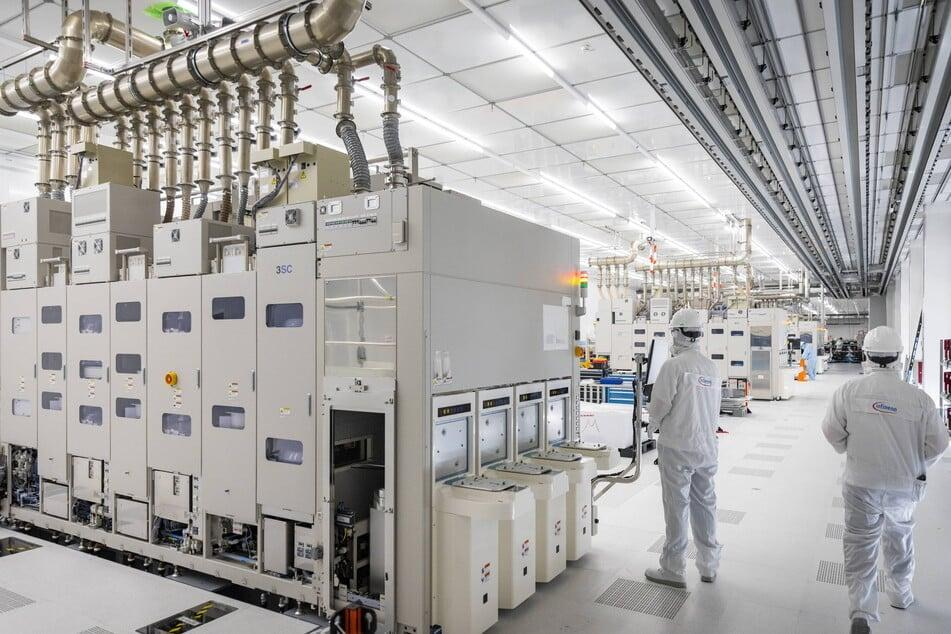
Underneath the trade text sits a deeper technological courtship. Through their Digital Partnership, the EU and Korea have reviewed joint progress on semiconductors, 5G and 6G networks and quantum computing. Collaborative chip research begun in late 2024 has pushed into neuromorphic computing and heterogeneous integration, the esoteric frontiers that determine whether future processors can run artificial intelligence and autonomous vehicles efficiently. A Semiconductors Researchers Forum is due in Brussels this year, and a fourth Digital Partnership Council meeting is planned for the second half of 2026.
The logic is complementary rather than competitive. Korea is a global leader in advanced chip manufacturing and materials engineering; Europe holds strengths in specialty chemicals, composites and the equipment that makes chipmaking possible. Neither can easily build what the other already has, which makes partnership cheaper than rivalry. The same complementarity now extends to defence supply chains for semiconductors, propulsion and energetics, following the security and defence partnership the two signed in November 2024.
This is what economic security looks like when it is done by invitation rather than coercion. Where China rations critical inputs through licences, the EU and Korea are trying to weave their supply chains together so tightly that disruption hurts both and therefore neither wants it. Trusted partners, predictable rules and shared research are the connective tissue of a bloc-led order that Brussels would prefer to the alternative of dependence on a single dominant supplier.
The risks are real. Korea sits beside China, its largest trading partner, and cannot afford to be seen choosing sides too openly. Europe’s habit of writing dense regulation can slow the very cooperation it wants to encourage. And digital agreements only matter if enforcement keeps pace with technology, which it rarely does. Yet the direction of travel is unmistakable. Two manufacturing democracies on opposite ends of Eurasia are deciding that their futures are safer entwined, and the digital rulebook is where that decision is being written down.