
Brussels legislates strategic autonomy and subsidises its opposite. The war in Iran has laid bare the contradiction at the heart of the Union’s energy strategy.
To shield the fishery, transport, and agriculture sectors from the oil and gas shock touched off by the war in Iran, the European Commission adopted a temporary state aid framework on 29 April, then loosened a parallel scheme so that governments may now cover 70 percent of the costs carried by energy-intensive industry, up from half. The same institution, alongside the European Central Bank and the International Monetary Fund, has cautioned member states against exactly the untargeted relief most of them are now dispensing. That tension is the real story of this emergency, far more telling than any headline price.
Begin with the diagnosis Brussels prefers to avoid. Three years ago the bloc told itself it had absorbed the central lesson of Moscow’s coercion through the pipelines: never again would a single hostile producer hold the continent’s heating and factories to ransom. Diversification was the cure. Import terminals for liquefied natural gas rose along the coasts, Doha and Washington were courted, and the political class pronounced the dependency severed. The closure of the Strait of Hormuz has shown that the reliance was never retired. Its address merely shifted from Russia to the Persian Gulf, and from there to the Gulf of Mexico.
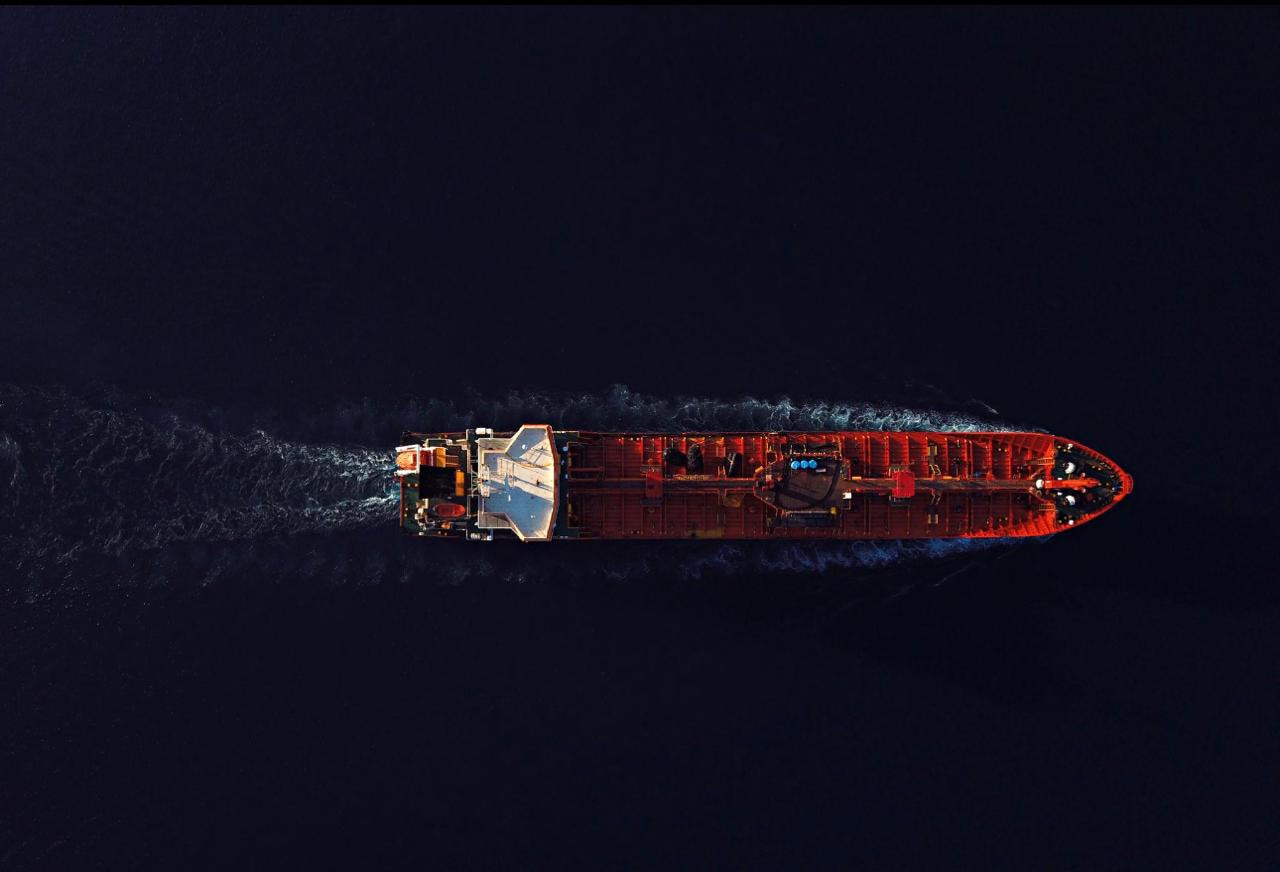
The hard numbers leave little room for comfort. Roughly a fifth of the world’s seaborne oil and gas transits Hormuz, and for the Qatari cargoes now trapped behind it no alternative maritime route exists. Dutch TTF, the European benchmark, ran from below 32 euros per megawatt hour on the eve of the first American strikes to above 60 by mid-March. The 27 entered the year with storage near a five-year trough, roughly 46 billion cubic metres against 77 two winters earlier. Since the fighting began the Union’s fossil import bill has climbed past 22 billion euros. The International Energy Agency, an organisation allergic to overstatement, ranks the episode the largest supply disruption in the history of the oil market.
The macroeconomic transmission was swift and familiar. On 19 March the European Central Bank suspended its scheduled rate cuts, raised its inflation forecast, and trimmed growth; the Commission’s spring projection now reads as a slowdown driven by the price of imported fuel. Chemicals and steel, thin on margin already, have begun mothballing capacity. Politicians grasp the stakes without needing the briefing, having watched the 2022 surge curdle into a cost-of-living revolt that rearranged electorates from The Hague to Rome.
“Strategic autonomy that expires at the filling station is a press release, not a doctrine.”
Confronted with this, most capitals have reached for the cheque book rather than the policy lever. Bruegel’s response tracker counts more than 11 billion euros in budgetary measures committed since late February, of which upwards of 72 percent, around 8.3 billion, is untargeted: blanket excise reductions, value-added tax relief, and fuel duty rebates that lower the apparent cost of burning hydrocarbons at the very moment supply is scarcest. Germany, Italy, and Poland have leaned hardest on this instrument. Such intervention does not simply waste money; it muffles the signal that would push households and firms to use less, and so entrenches the exposure that produced the squeeze. The Commission, the Bank, and the Fund have each warned against the method. Member governments are pursuing it regardless.
None of this is new, which is what ought to worry Brussels most. The relief packages of 2021 to 2023 were introduced as provisional, some as one-off gestures, before swelling to 758 billion euros across the bloc, Britain, and Norway. The Commission’s own figures show subsidies climbing from 213 billion euros in 2021 to 397 billion in 2022, then receding only slightly to 354 billion the year after. Temporary arrangements, once built, prove stubbornly permanent, which is why economists now press the executive to respect the December 2026 expiry written into its current scheme. What the last crisis taught was that subsidy is politically easy and strategically ruinous. The teaching did not take.
The alternative is not theoretical, and the evidence sits within the Union itself. In Spain, a decade of heavy investment in wind and solar has cut the share of hours in which gas sets the wholesale electricity price from three quarters in 2019 to roughly 15 percent today; when the Iranian shock struck, Spanish power costs jumped briefly, then settled near 66 euros per megawatt hour for the balance of the year, close to half the Italian figure. In Italy, where the same fuel dictates the wholesale rate nine times in ten, the disturbance in the Gulf fed almost directly into invoices in Milan and Turin. Geography did not write that divergence. A structural choice did.
“Subsidy buys a season. Substitution buys a decade.”
The distinction matters more than any single tariff. Madrid lowered the quantity of imported fuel embedded in its economy; Rome, broadly, has tried to soften the bills attached to the volume it still burns. Only the first path offers durable shelter when the next chokepoint seizes, and another one will. Subsidy buys a season. Substitution buys a decade.
Nor is the wiser course a mystery to those prepared to take it. The Netherlands has routed its support into permanent efficiency upgrades. Sweden has paid households lump sums that ease the budget without blunting the incentive to save, while funding electric vehicles and weaning its own agencies off hydrocarbons. Those governments grasped that relief and reform need not compete, so long as the money stays focused, time-limited, and linked to consuming less of the commodity at the heart of the danger. The knowledge is available. What differs across the 27 is political nerve.
This is the uncomfortable conclusion the Iran emergency forces. The Union’s revealed preference, whatever its treaties and competitiveness reports proclaim, is to protect present usage rather than lower it, which guarantees that each shock leaves its successor fully armed. Strategic autonomy that expires at the filling station is a press release, not a doctrine. The remedy is the one the bloc’s own institutions keep prescribing and its members keep declining: intervention that is targeted and conditional, set against a sustained build-out of electrification, transmission, storage, and demand reduction. As the Jacques Delors Institute put it, the choice is to double down on the transition, not retreat from it.
The Strait of Hormuz will open again. Tankers will sail, prices will ease, and the political urgency will drain on cue, as it has after every previous spasm. The structural questions will sit exactly where they are now, unanswered and compounding. Whether 2026 is remembered as the year Europe finally treated resilience as infrastructure to be built rather than a virtue to be invoked, or merely as the third rehearsal of an avoidable error, is being decided in Brussels at this moment, quietly, and largely by default.
ABOUT THE AUTHOR
Mark Wood is a Brussels-based policy analyst and researcher specializing in EU external relations
and Geopolitics. . He is a regular contributor to The European Post.