August 10, 2026
LATEST
Beijing Answers Europe’s Russia Sanctions in KindOne Year On, the EU-Japan Alliance Faces Its First TestEurope’s Chip Ambitions Still Run Through Taiwan’s FabsWhy South Korea Bet Its Research Future on Europe’s ProgrammeEurope and Japan Deepen Their Economic Alliance as Rivals CircleFive Joint Defence Projects Launch Europe’s Military ShieldElectrification Plan Aims to Make Europe First Electro ContinentHorizon Europe Budget Fight Heats Up as Ministers Push BackGoogle’s DMA Fine Sets Off a Transatlantic Tariff ClashTwenty New University Alliances Join Erasmus for Two YearsForeign Subsidies Case Puts Temu in the EU’s SightsVan Tachographs Now Mandatory for Cross-Border FleetsStress Test Exposes Gaps in Euro Area Bank DefencesEurope Bets on a Gulf Partnership Before the Riyadh SummitWhy the Atlantic Route Now Runs Through MauritaniaKyiv and Chisinau Advance as the EU Accession Talks Gather PaceEurope’s New Digital Border System Beds In After a Rocky RolloutBrussels Mounts Its Largest Wildfire Response as the Fires SpreadRetail Spending Slipped in June, Wrong-Footing EconomistsHeatwave Warning Puts Brussels on Alert for Vulnerable GroupsBeijing Answers Europe’s Russia Sanctions in KindOne Year On, the EU-Japan Alliance Faces Its First TestEurope’s Chip Ambitions Still Run Through Taiwan’s FabsWhy South Korea Bet Its Research Future on Europe’s ProgrammeEurope and Japan Deepen Their Economic Alliance as Rivals CircleFive Joint Defence Projects Launch Europe’s Military ShieldElectrification Plan Aims to Make Europe First Electro ContinentHorizon Europe Budget Fight Heats Up as Ministers Push BackGoogle’s DMA Fine Sets Off a Transatlantic Tariff ClashTwenty New University Alliances Join Erasmus for Two YearsForeign Subsidies Case Puts Temu in the EU’s SightsVan Tachographs Now Mandatory for Cross-Border FleetsStress Test Exposes Gaps in Euro Area Bank DefencesEurope Bets on a Gulf Partnership Before the Riyadh SummitWhy the Atlantic Route Now Runs Through MauritaniaKyiv and Chisinau Advance as the EU Accession Talks Gather PaceEurope’s New Digital Border System Beds In After a Rocky RolloutBrussels Mounts Its Largest Wildfire Response as the Fires SpreadRetail Spending Slipped in June, Wrong-Footing EconomistsHeatwave Warning Puts Brussels on Alert for Vulnerable Groups
August 10, 2026
LATEST
Beijing Answers Europe’s Russia Sanctions in KindOne Year On, the EU-Japan Alliance Faces Its First TestEurope’s Chip Ambitions Still Run Through Taiwan’s FabsWhy South Korea Bet Its Research Future on Europe’s ProgrammeEurope and Japan Deepen Their Economic Alliance as Rivals CircleFive Joint Defence Projects Launch Europe’s Military ShieldElectrification Plan Aims to Make Europe First Electro ContinentHorizon Europe Budget Fight Heats Up as Ministers Push BackGoogle’s DMA Fine Sets Off a Transatlantic Tariff ClashTwenty New University Alliances Join Erasmus for Two YearsForeign Subsidies Case Puts Temu in the EU’s SightsVan Tachographs Now Mandatory for Cross-Border FleetsStress Test Exposes Gaps in Euro Area Bank DefencesEurope Bets on a Gulf Partnership Before the Riyadh SummitWhy the Atlantic Route Now Runs Through MauritaniaKyiv and Chisinau Advance as the EU Accession Talks Gather PaceEurope’s New Digital Border System Beds In After a Rocky RolloutBrussels Mounts Its Largest Wildfire Response as the Fires SpreadRetail Spending Slipped in June, Wrong-Footing EconomistsHeatwave Warning Puts Brussels on Alert for Vulnerable GroupsBeijing Answers Europe’s Russia Sanctions in KindOne Year On, the EU-Japan Alliance Faces Its First TestEurope’s Chip Ambitions Still Run Through Taiwan’s FabsWhy South Korea Bet Its Research Future on Europe’s ProgrammeEurope and Japan Deepen Their Economic Alliance as Rivals CircleFive Joint Defence Projects Launch Europe’s Military ShieldElectrification Plan Aims to Make Europe First Electro ContinentHorizon Europe Budget Fight Heats Up as Ministers Push BackGoogle’s DMA Fine Sets Off a Transatlantic Tariff ClashTwenty New University Alliances Join Erasmus for Two YearsForeign Subsidies Case Puts Temu in the EU’s SightsVan Tachographs Now Mandatory for Cross-Border FleetsStress Test Exposes Gaps in Euro Area Bank DefencesEurope Bets on a Gulf Partnership Before the Riyadh SummitWhy the Atlantic Route Now Runs Through MauritaniaKyiv and Chisinau Advance as the EU Accession Talks Gather PaceEurope’s New Digital Border System Beds In After a Rocky RolloutBrussels Mounts Its Largest Wildfire Response as the Fires SpreadRetail Spending Slipped in June, Wrong-Footing EconomistsHeatwave Warning Puts Brussels on Alert for Vulnerable Groups

Competitiveness Compass Channels Single Market Push Across Capitals

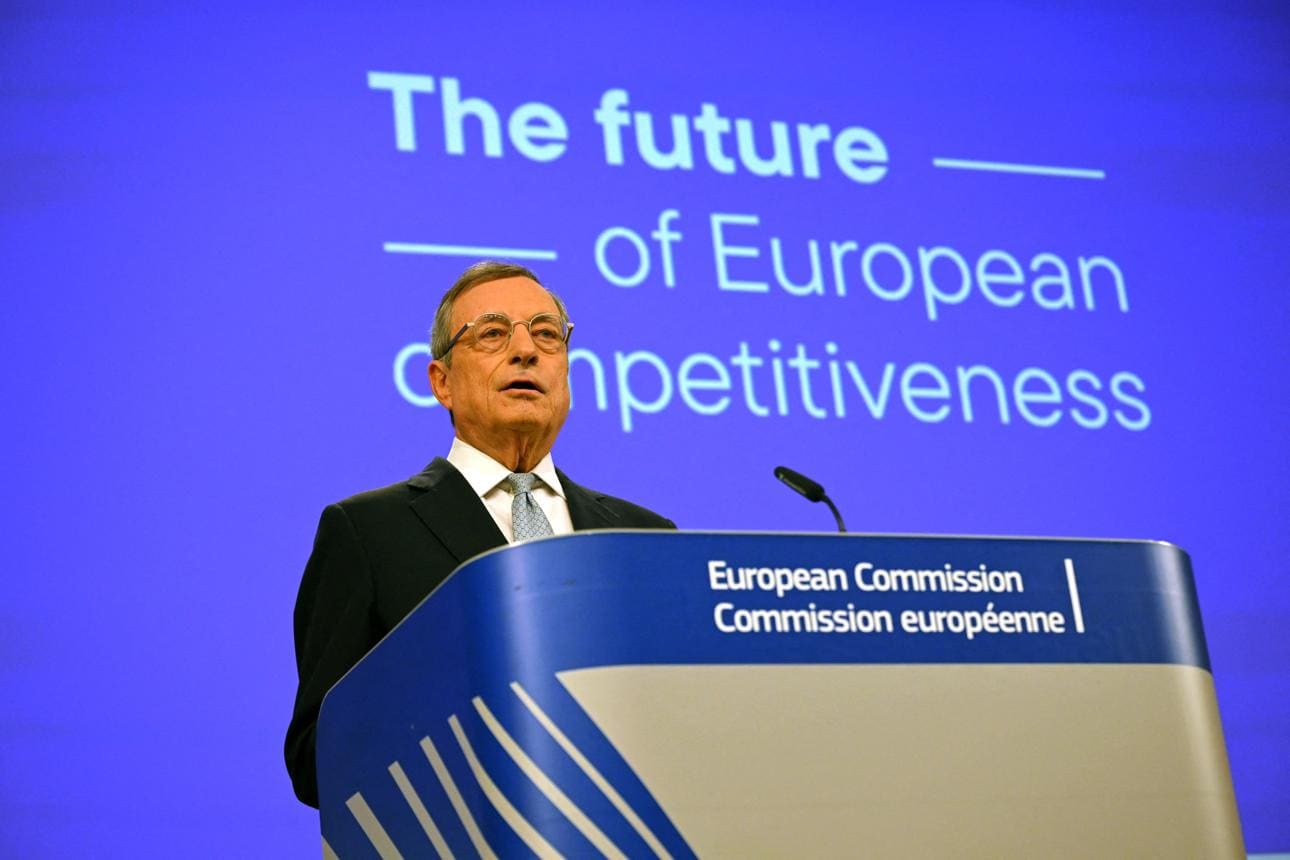
Strasbourg: A short walk from the Parliament’s hemicycle, the Commission’s working teams have spent the closing weeks of May translating the 2026 Annual Single Market and Competitiveness Report into a sequence of concrete legislative deliverables that the College intends to push through before the summer recess. The Report, adopted on 30 January and re-presented to MEPs in two Strasbourg plenary debates since, is the sixth in an annual series mandated under the regulation that governs the European Semester. This edition’s diagnostic — that the bloc’s productivity gap with the United States widened again in 2025, that energy costs remain structurally higher, and that the single market still functions as twenty-seven loosely federated markets in services — was no surprise. The volume of follow-up activity it has triggered, however, is a departure from previous cycles.

The new texture is the One Europe, One Market agenda launched by EU leaders in March. The agenda commits the College to deliver implementing measures in five areas — capital markets integration, the 28th company regime, regulatory burden reduction, services market integration, and energy market integration — either within 2026 where possible, or by the end of 2027 at the latest. That cadence is significantly tighter than the standard single-market work programmes of the past decade and is the lever the Commission is now using to push reluctant capitals into accepting harmonised solutions over national templates.

Maroš Šefčovič’s cabinet, which holds the trade and economic-security portfolio, has been informally chairing an inter-Commission coordination cell that meets weekly to track the One Europe, One Market deliverables. Officials describe the structure as deliberately light — no formal mandate, no published agenda — to allow it to operate as a horizontal accelerator rather than a parallel hierarchy. The 28th regime proposal, which would create a single optional company statute that small and mid-cap firms could opt into across all member states, has now reached the impact-assessment stage. The single-market services package, anchored in a revised mutual-recognition mechanism, is at the inter-service consultation stage.

Capital markets integration remains the file with the heaviest lift. The Commission has signalled it will publish a comprehensive Savings and Investments Union package this summer that combines a revision of the Prospectus Regulation with the Listing Act follow-through and a new framework for supplementary pension portability. Several capitals are nervous about the supervisory-architecture component, which would expand the role of ESMA over large cross-border issuers. Berlin and Paris are aligned in pushing for stronger central oversight; the smaller financial centres are more cautious.

Industry is watching the regulatory-burden track most closely. The Commission’s omnibus simplification proposals, the first of which moved through Parliament in April, have already lifted reporting obligations on small and mid-cap companies and partly recalibrated the Corporate Sustainability Reporting Directive. The next omnibus, expected before September, will tackle the dossier overlap between the AI Act, the Data Act and the Cyber Resilience Act. The Commission has framed this as targeted cleanup rather than rollback, but the Parliament’s IMCO committee has signalled it will scrutinise any reopening of substantive obligations.

For Strasbourg’s plenary calendar, the test arrives at the June and July sessions, when MEPs will take first readings on at least three of the One Europe, One Market deliverables. Šefčovič’s team is engineering the votes to land in clusters that allow groups to swap concessions across files, a tactic the Council’s strategists are also encouraging. Without that horizontal logic, individual files would slow under the weight of national amendments. With it, the agenda has a credible path to 2027.