Prague: The agency that runs Europe’s satellite navigation and earth-observation services has opened a new chapter in how the Union turns space infrastructure into commercial and scientific activity, with the publication of the Horizon Europe work programme for digital, industry and space covering 2026 and 2027 and the launch of a fresh funding call administered from its Czech headquarters. The move is technical in appearance and strategic in substance, because it determines which companies and laboratories will build the next layer of value on top of the bloc’s orbital assets.
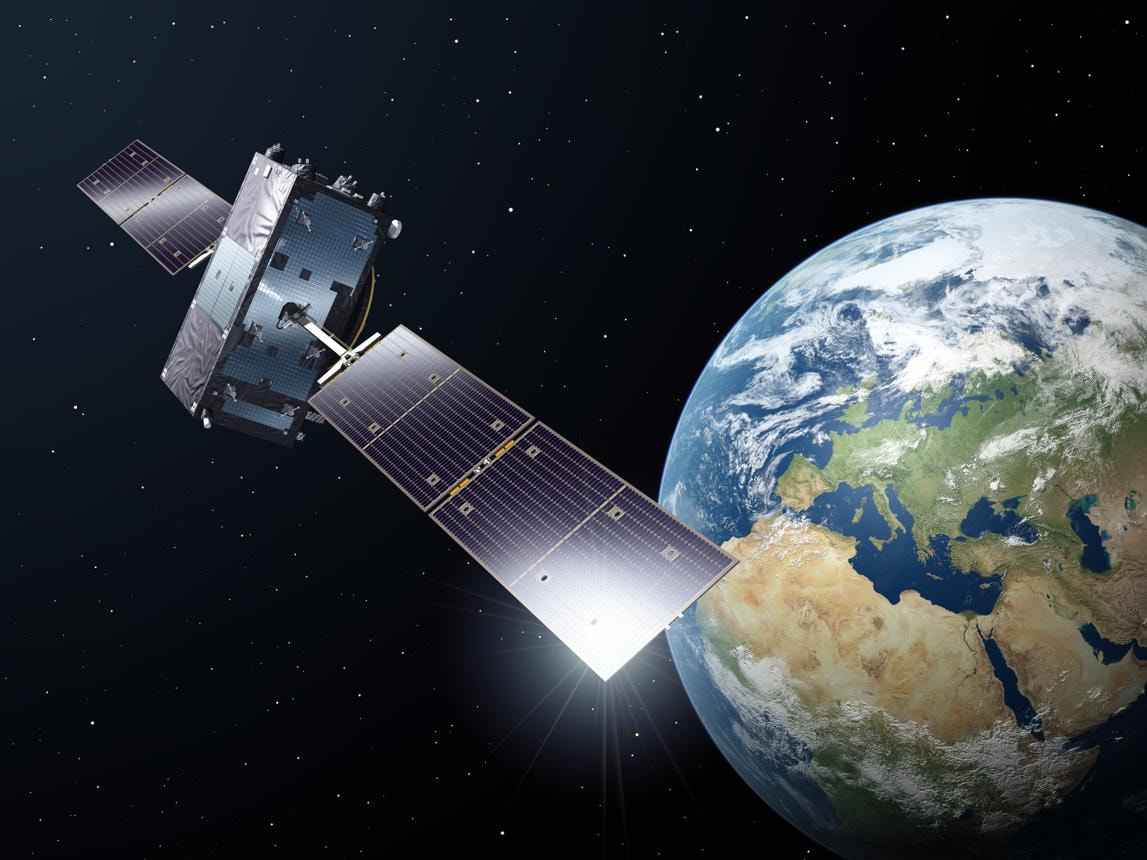
The European Union Agency for the Space Programme oversees an unusually integrated portfolio. Under one roof it brings together Galileo and EGNOS for satellite navigation, Copernicus for earth observation, and the emerging secure-connectivity strands that the Union is assembling to reduce its dependence on infrastructure it does not control. The distinguishing feature of the European approach is that these systems were conceived as a single programme rather than a collection of separate national projects, and the agency’s task is to extract public and economic benefit from that integration rather than merely to keep the satellites aloft.
The significance of a funding call lies in what it reveals about priorities. Galileo signals already underpin smartphone positioning and the precise timing that synchronises banking and energy networks; Copernicus data feed climate monitoring, disaster response and agricultural planning. Yet the raw signals and imagery are only as valuable as the applications built upon them, and that downstream layer is where Europe has historically lagged behind its capacity to launch hardware. Channelling Horizon Europe money toward firms and researchers who turn data into services is a deliberate attempt to close the gap between owning the infrastructure and profiting from it.
It is worth resisting the temptation to overstate any single announcement. A work programme sets the framework and a call opens a competition; neither guarantees that the funded projects will mature into durable businesses or that European start-ups will retain the value they create rather than being absorbed elsewhere. The structural challenge for European space policy has long been commercialisation, the conversion of public investment and engineering excellence into companies that scale. A funding round addresses that challenge at the margin; it does not resolve it, and the genuine test will be visible only in the firms that survive several years from now.
The strategic backdrop sharpens the stakes. Reliable positioning, timing and earth observation are no longer conveniences but foundations of critical infrastructure, and a continent that depends on systems operated by others accepts a quiet vulnerability. Europe’s insistence on owning and governing its own constellations is partly an industrial policy and partly a security one, and the funding mechanisms that cultivate a domestic ecosystem of users and suppliers are how that autonomy is made real rather than merely declared. Sovereignty in space is built downstream as much as in orbit.
The constructive conclusion is that the new call is a sensible, incremental instrument aimed at Europe’s persistent weakness rather than its evident strength. The satellites work, the data flow, and the unfinished business is the marketplace of applications that should grow around them. Whether the money disbursed from Prague produces that marketplace will be judged not by the elegance of the work programme but by the companies and capabilities still standing when the next one is written.