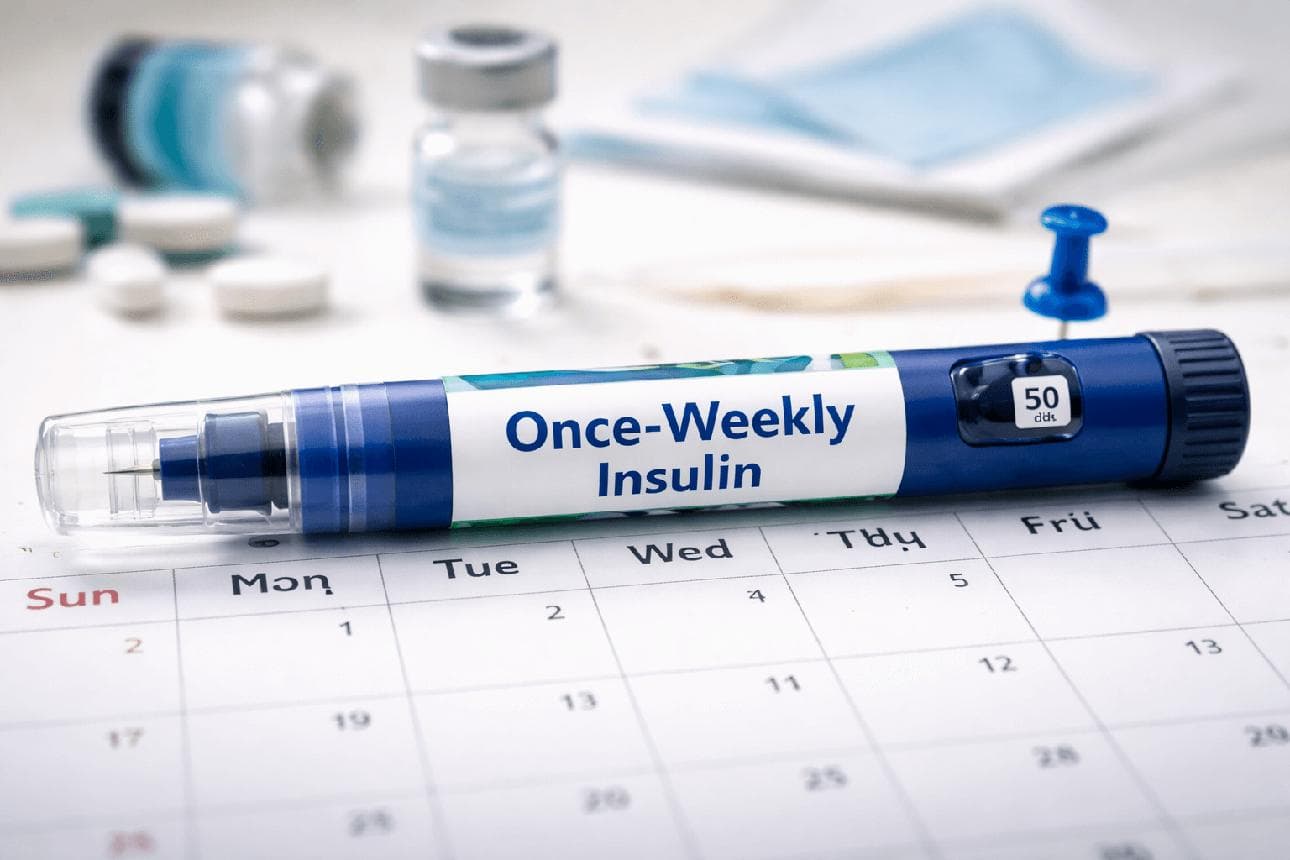
Uppsala: A shot taken once every seven days rather than once a day has cleared its most important European hurdle. At its June meeting, the human medicines committee of the European Medicines Agency adopted a positive opinion for Onswik, a weekly basal insulin known chemically as insulin efsitora alfa, for adults living with type 2 diabetes. The recommendation now travels to the European Commission, which issues the marketing authorisation valid across the Union.
The appeal of a weekly insulin lies in a simple arithmetic of adherence. A patient on daily basal insulin faces roughly 365 injections a year; a weekly formulation cuts that to about 52. For a chronic condition that demands lifelong management, fewer injections mean fewer missed doses, less injection fatigue, and, clinicians hope, steadier blood sugar over time. Poor adherence is one of the quiet drivers of diabetes complications, from nerve damage to kidney failure, and any tool that eases the daily grind of treatment carries real public health weight.
Type 2 diabetes affects tens of millions of Europeans and its prevalence continues to climb with ageing populations and rising obesity. Basal insulin, the slow-acting background dose that controls glucose between meals and overnight, is a mainstay once tablets and lifestyle changes no longer suffice. A once-weekly option reshapes the rhythm of that therapy, particularly for older patients, those who depend on carers to administer injections, and people whose routines make daily dosing hard to sustain.
The committee’s endorsement is not unqualified in the way regulators frame these things. A positive opinion reflects a judgment that benefits outweigh risks for the approved use, but prescribers will watch closely for how a long-acting depot behaves when a dose needs adjusting or when illness disrupts glucose control. A weekly injection is harder to fine-tune than a daily one, and hypoglycaemia, the dangerous dip in blood sugar, remains the abiding concern with any insulin. Product information will spell out how clinicians should titrate and monitor.
Why it matters extends past convenience. If weekly insulin proves as safe and effective in everyday practice as in trials, it could shift how health systems structure diabetes care, easing the burden on nurses and community services that support injection regimes. It may also intensify competition among manufacturers racing to bring long-interval insulins to market, with potential downstream effects on price.
What comes next is the Commission’s formal decision, expected in the following weeks, after which national health systems weigh reimbursement. That final step often determines whether an innovation reaches patients broadly or remains a premium option. For the millions managing diabetes across Europe, the question is less whether the science works than whether their health service will pay for the reprieve of fewer needles.