August 10, 2026
LATEST
After Nine Years, Europe and Australia Seal a Trade PactBeijing Answers Europe’s Russia Sanctions in KindOne Year On, the EU-Japan Alliance Faces Its First TestEurope’s Chip Ambitions Still Run Through Taiwan’s FabsWhy South Korea Bet Its Research Future on Europe’s ProgrammeEurope and Japan Deepen Their Economic Alliance as Rivals CircleFive Joint Defence Projects Launch Europe’s Military ShieldElectrification Plan Aims to Make Europe First Electro ContinentHorizon Europe Budget Fight Heats Up as Ministers Push BackGoogle’s DMA Fine Sets Off a Transatlantic Tariff ClashTwenty New University Alliances Join Erasmus for Two YearsForeign Subsidies Case Puts Temu in the EU’s SightsVan Tachographs Now Mandatory for Cross-Border FleetsStress Test Exposes Gaps in Euro Area Bank DefencesEurope Bets on a Gulf Partnership Before the Riyadh SummitWhy the Atlantic Route Now Runs Through MauritaniaKyiv and Chisinau Advance as the EU Accession Talks Gather PaceEurope’s New Digital Border System Beds In After a Rocky RolloutBrussels Mounts Its Largest Wildfire Response as the Fires SpreadRetail Spending Slipped in June, Wrong-Footing EconomistsAfter Nine Years, Europe and Australia Seal a Trade PactBeijing Answers Europe’s Russia Sanctions in KindOne Year On, the EU-Japan Alliance Faces Its First TestEurope’s Chip Ambitions Still Run Through Taiwan’s FabsWhy South Korea Bet Its Research Future on Europe’s ProgrammeEurope and Japan Deepen Their Economic Alliance as Rivals CircleFive Joint Defence Projects Launch Europe’s Military ShieldElectrification Plan Aims to Make Europe First Electro ContinentHorizon Europe Budget Fight Heats Up as Ministers Push BackGoogle’s DMA Fine Sets Off a Transatlantic Tariff ClashTwenty New University Alliances Join Erasmus for Two YearsForeign Subsidies Case Puts Temu in the EU’s SightsVan Tachographs Now Mandatory for Cross-Border FleetsStress Test Exposes Gaps in Euro Area Bank DefencesEurope Bets on a Gulf Partnership Before the Riyadh SummitWhy the Atlantic Route Now Runs Through MauritaniaKyiv and Chisinau Advance as the EU Accession Talks Gather PaceEurope’s New Digital Border System Beds In After a Rocky RolloutBrussels Mounts Its Largest Wildfire Response as the Fires SpreadRetail Spending Slipped in June, Wrong-Footing Economists
August 10, 2026
LATEST
After Nine Years, Europe and Australia Seal a Trade PactBeijing Answers Europe’s Russia Sanctions in KindOne Year On, the EU-Japan Alliance Faces Its First TestEurope’s Chip Ambitions Still Run Through Taiwan’s FabsWhy South Korea Bet Its Research Future on Europe’s ProgrammeEurope and Japan Deepen Their Economic Alliance as Rivals CircleFive Joint Defence Projects Launch Europe’s Military ShieldElectrification Plan Aims to Make Europe First Electro ContinentHorizon Europe Budget Fight Heats Up as Ministers Push BackGoogle’s DMA Fine Sets Off a Transatlantic Tariff ClashTwenty New University Alliances Join Erasmus for Two YearsForeign Subsidies Case Puts Temu in the EU’s SightsVan Tachographs Now Mandatory for Cross-Border FleetsStress Test Exposes Gaps in Euro Area Bank DefencesEurope Bets on a Gulf Partnership Before the Riyadh SummitWhy the Atlantic Route Now Runs Through MauritaniaKyiv and Chisinau Advance as the EU Accession Talks Gather PaceEurope’s New Digital Border System Beds In After a Rocky RolloutBrussels Mounts Its Largest Wildfire Response as the Fires SpreadRetail Spending Slipped in June, Wrong-Footing EconomistsAfter Nine Years, Europe and Australia Seal a Trade PactBeijing Answers Europe’s Russia Sanctions in KindOne Year On, the EU-Japan Alliance Faces Its First TestEurope’s Chip Ambitions Still Run Through Taiwan’s FabsWhy South Korea Bet Its Research Future on Europe’s ProgrammeEurope and Japan Deepen Their Economic Alliance as Rivals CircleFive Joint Defence Projects Launch Europe’s Military ShieldElectrification Plan Aims to Make Europe First Electro ContinentHorizon Europe Budget Fight Heats Up as Ministers Push BackGoogle’s DMA Fine Sets Off a Transatlantic Tariff ClashTwenty New University Alliances Join Erasmus for Two YearsForeign Subsidies Case Puts Temu in the EU’s SightsVan Tachographs Now Mandatory for Cross-Border FleetsStress Test Exposes Gaps in Euro Area Bank DefencesEurope Bets on a Gulf Partnership Before the Riyadh SummitWhy the Atlantic Route Now Runs Through MauritaniaKyiv and Chisinau Advance as the EU Accession Talks Gather PaceEurope’s New Digital Border System Beds In After a Rocky RolloutBrussels Mounts Its Largest Wildfire Response as the Fires SpreadRetail Spending Slipped in June, Wrong-Footing Economists

Frankfurt Audit Finds Draghi Compass Stalled at Eleven Percent Done

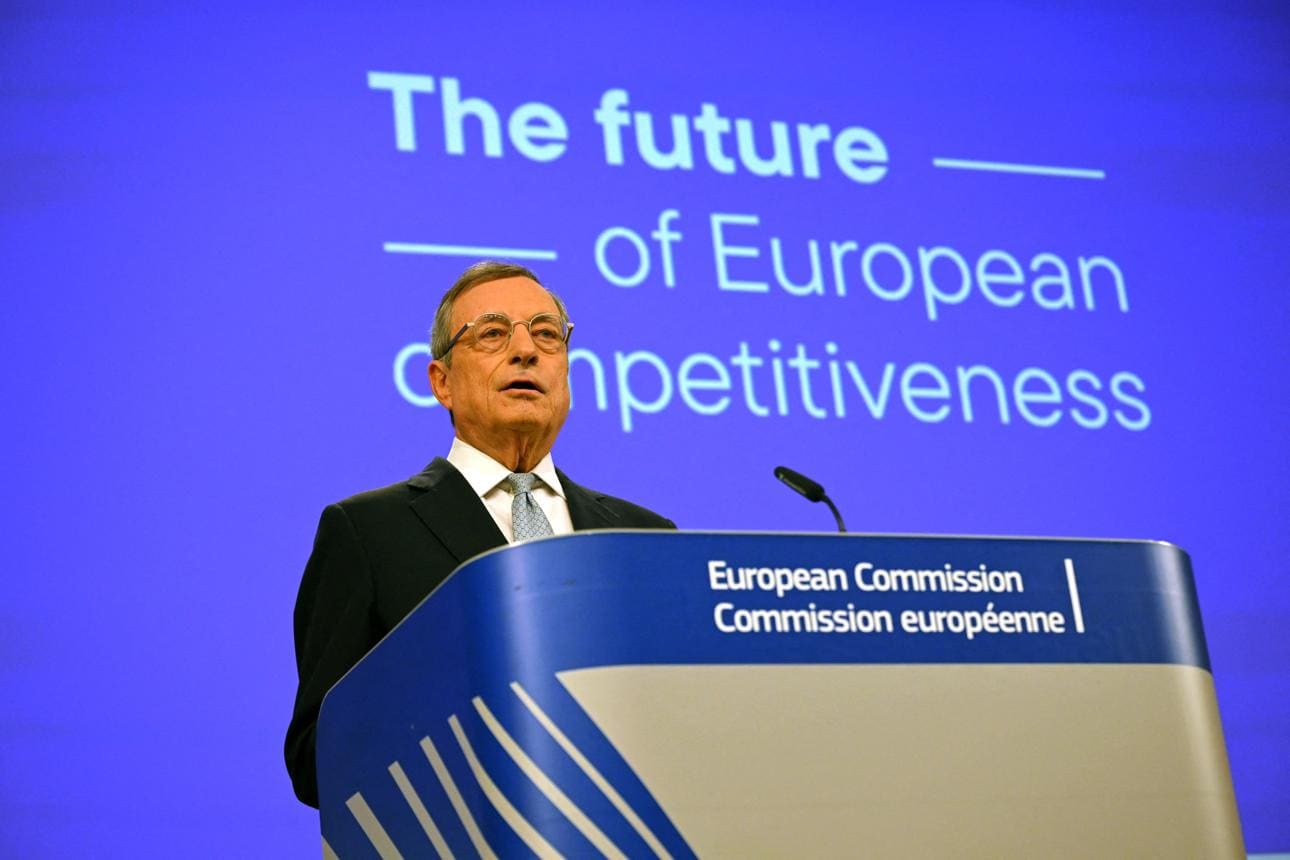
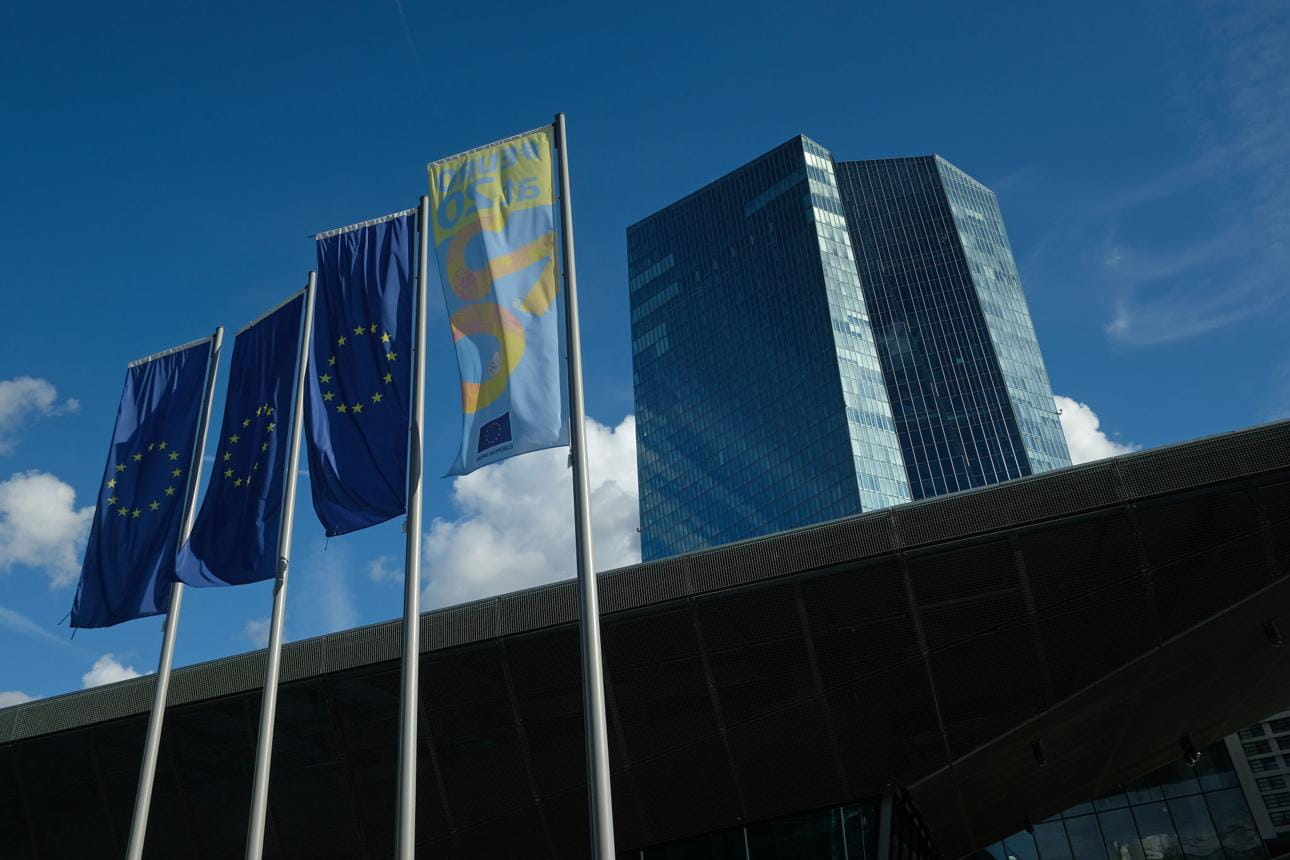
Frankfurt: Bankers and policy researchers gathered in the German financial capital this week for the first independent audit of the Draghi report’s implementation, and the headline number is sobering. Of the three hundred and eighty-three concrete recommendations contained in the former ECB president’s 2024 study, only forty-three have been fully implemented, with seventy-seven partially in place, one hundred and seventy-six still in progress and eighty-seven untouched. The fully-implemented share works out to just eleven point two percent, eighteen months after the report’s publication.

The audit, presented at a closed-door session attended by Bundesbank officials and ECB staff, was conducted by the Observatory on European Competitiveness, a research consortium with ties to several national central banks. Its methodology breaks the Draghi recommendations into the three pillars of the original report: closing the innovation gap, aligning decarbonisation with industrial competitiveness, and reducing strategic dependencies including in defence.

The Frankfurt setting is fitting. Draghi’s central thesis is that without a substantial increase in productive investment, on the order of eight hundred billion euros per year, the gap between European and American living standards will widen to a point where social-model preservation becomes mathematically impossible. The financing architecture he proposed depends heavily on a more integrated European capital market, an agenda where Frankfurt’s institutions have particular stake.

The Commission’s response, the Competitiveness Compass unveiled in January 2025, was meant to translate Draghi’s diagnosis into operational policy. Critics in the audit room argued that the Compass had effectively delivered a Draghi-on-a-shoestring outcome: the strategic framework is in place, but the financial muscle to execute it is missing. The 2028-2034 multiannual financial framework negotiations will determine whether that judgement holds.

The pillar-by-pillar breakdown is revealing. On innovation, the audit credits the Commission with structural moves on artificial intelligence factories, semiconductor sovereignty and Horizon Europe simplification, but warns that venture-stage capital remains chronically short. European tech firms still relocate to American capital markets at growth stage, a pattern the Capital Markets Union has not yet broken. On decarbonisation, the Clean Industrial Deal and related state-aid frameworks have moved faster than expected, but implementation varies sharply across member states, with the central and eastern flank lagging significantly.

The strategic-autonomy pillar is where the audit is most critical. Despite the geopolitical context, joint defence procurement remains modest in scale, and the dependencies the report identified in critical raw materials, pharmaceutical inputs and rare earths have not been meaningfully reduced. The European Defence Industrial Strategy and the related industrial regulation have advanced through the institutions, but the underlying procurement choices made by member states still privilege national champions.

For Frankfurt’s financial sector, the audit’s most consequential finding concerns capital-market integration. Draghi’s proposal for centralised supervision and common funding instruments has progressed only marginally. The Commission’s recent moves on the savings and investments union are technically aligned with the report but politically constrained. Without a credible federal capital base, the eight-hundred-billion-euro annual investment number remains aspirational.

The audit will be published in summary form before the summer. Its broader function is to keep the Draghi diagnosis present in the political conversation as the next budget cycle approaches. Whether Frankfurt’s verdict influences the spending choices made in capitals over the coming year will determine whether the report becomes a foundational text or a high-water mark for a missed European moment.