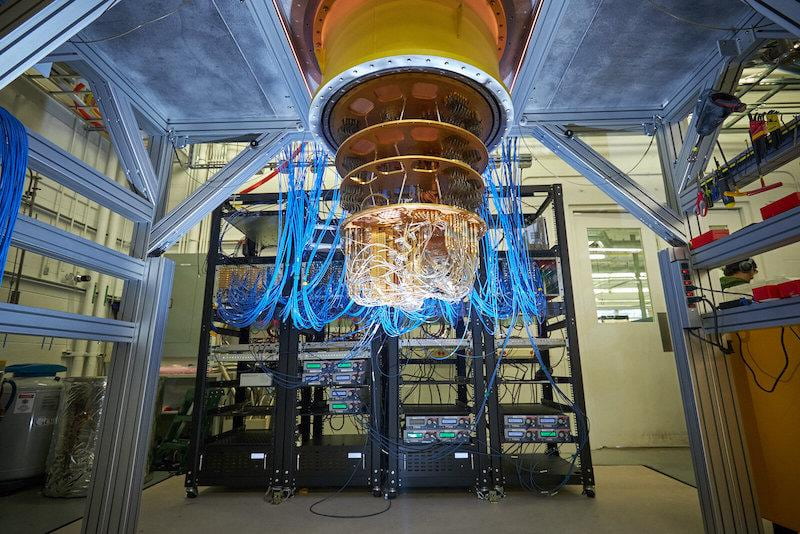
Delft: In the laboratories where Europe’s quantum researchers chill their machines to temperatures colder than deep space, there is a recurring worry that has nothing to do with physics. The continent produces a remarkable share of the world’s quantum science, yet it has watched other technologies, from solar panels to advanced chips, mature into industries dominated by rivals abroad. A new legislative initiative now taking shape is meant to keep quantum from following the same path, turning European breakthroughs into European companies before someone else commercialises the work.
The planned measure, expected as a Commission proposal this year, would build on a strategy adopted the previous summer and translate its broad ambitions into concrete instruments. Officials describe three goals. The first is to coordinate the research money that member states currently spend in isolation, so that national programmes reinforce rather than duplicate one another. The second is to scale up industrial capacity, financing the pilot lines and a shared design facility that a start-up cannot build alone but that the technology needs to leave the laboratory. The third is to secure the supply chains, the specialised components, cryogenics and control electronics, on which quantum hardware depends and which a hostile supplier could choke off.
The framing is openly strategic. Quantum technology is dual-use, promising both commercial advantage and military and intelligence applications, and the prospect of a machine capable of breaking today’s encryption has made governments treat the field as a matter of security as much as science. The initiative is designed to sit alongside the bloc’s existing efforts on semiconductors, supercomputing and secure connectivity, knitting them into a single industrial strategy rather than a scatter of disconnected programmes.
That coherence is the hard part. Europe’s quantum strength is real but dispersed across universities and small firms in several countries, each protective of its own funding and talent. Persuading governments to pool resources, and to accept that a flagship design facility might be built in a neighbour’s territory rather than their own, has defeated similar efforts in other sectors. The value of the new law will depend less on its stated aims than on whether it can move actual money and overcome the instinct of each capital to back its national champion.
Investors add a further note of urgency. Private capital for quantum has been thinner in Europe than in the United States or China, and promising teams have a habit of relocating, or selling themselves, to wherever the funding is deepest. A credible public framework, with reliable money and a clear path from prototype to production, is partly an attempt to give those teams a reason to stay. The risk, familiar from earlier technology pushes, is that the announcement outpaces the financing, and that the law arrives with grand language but modest cheques.
For the researchers in places like this Dutch university town, the stakes are concrete. They have the science; what they have lacked is the bridge to industry. Whether the coming rulebook builds that bridge, or merely describes it, will determine if Europe’s quantum advantage becomes a business or remains a footnote in someone else’s success story.