August 10, 2026
LATEST
Five Joint Defence Projects Launch Europe’s Military ShieldElectrification Plan Aims to Make Europe First Electro ContinentHorizon Europe Budget Fight Heats Up as Ministers Push BackGoogle’s DMA Fine Sets Off a Transatlantic Tariff ClashTwenty New University Alliances Join Erasmus for Two YearsForeign Subsidies Case Puts Temu in the EU’s SightsVan Tachographs Now Mandatory for Cross-Border FleetsStress Test Exposes Gaps in Euro Area Bank DefencesEurope Bets on a Gulf Partnership Before the Riyadh SummitWhy the Atlantic Route Now Runs Through MauritaniaKyiv and Chisinau Advance as the EU Accession Talks Gather PaceEurope’s New Digital Border System Beds In After a Rocky RolloutBrussels Mounts Its Largest Wildfire Response as the Fires SpreadRetail Spending Slipped in June, Wrong-Footing EconomistsHeatwave Warning Puts Brussels on Alert for Vulnerable GroupsKANAL’s 230 Million Euro Museum Sets a November Opening DatePension Savings Rules Get a Reset as the EU Scraps the 1% CapMedicine Shortages Move to the Heart of Europe’s Pharma ResetJapan Becomes Europe’s Closest Security Partner in AsiaCan Europe’s New Zealand Deal Anchor It in the Pacific?Five Joint Defence Projects Launch Europe’s Military ShieldElectrification Plan Aims to Make Europe First Electro ContinentHorizon Europe Budget Fight Heats Up as Ministers Push BackGoogle’s DMA Fine Sets Off a Transatlantic Tariff ClashTwenty New University Alliances Join Erasmus for Two YearsForeign Subsidies Case Puts Temu in the EU’s SightsVan Tachographs Now Mandatory for Cross-Border FleetsStress Test Exposes Gaps in Euro Area Bank DefencesEurope Bets on a Gulf Partnership Before the Riyadh SummitWhy the Atlantic Route Now Runs Through MauritaniaKyiv and Chisinau Advance as the EU Accession Talks Gather PaceEurope’s New Digital Border System Beds In After a Rocky RolloutBrussels Mounts Its Largest Wildfire Response as the Fires SpreadRetail Spending Slipped in June, Wrong-Footing EconomistsHeatwave Warning Puts Brussels on Alert for Vulnerable GroupsKANAL’s 230 Million Euro Museum Sets a November Opening DatePension Savings Rules Get a Reset as the EU Scraps the 1% CapMedicine Shortages Move to the Heart of Europe’s Pharma ResetJapan Becomes Europe’s Closest Security Partner in AsiaCan Europe’s New Zealand Deal Anchor It in the Pacific?
August 10, 2026
LATEST
Five Joint Defence Projects Launch Europe’s Military ShieldElectrification Plan Aims to Make Europe First Electro ContinentHorizon Europe Budget Fight Heats Up as Ministers Push BackGoogle’s DMA Fine Sets Off a Transatlantic Tariff ClashTwenty New University Alliances Join Erasmus for Two YearsForeign Subsidies Case Puts Temu in the EU’s SightsVan Tachographs Now Mandatory for Cross-Border FleetsStress Test Exposes Gaps in Euro Area Bank DefencesEurope Bets on a Gulf Partnership Before the Riyadh SummitWhy the Atlantic Route Now Runs Through MauritaniaKyiv and Chisinau Advance as the EU Accession Talks Gather PaceEurope’s New Digital Border System Beds In After a Rocky RolloutBrussels Mounts Its Largest Wildfire Response as the Fires SpreadRetail Spending Slipped in June, Wrong-Footing EconomistsHeatwave Warning Puts Brussels on Alert for Vulnerable GroupsKANAL’s 230 Million Euro Museum Sets a November Opening DatePension Savings Rules Get a Reset as the EU Scraps the 1% CapMedicine Shortages Move to the Heart of Europe’s Pharma ResetJapan Becomes Europe’s Closest Security Partner in AsiaCan Europe’s New Zealand Deal Anchor It in the Pacific?Five Joint Defence Projects Launch Europe’s Military ShieldElectrification Plan Aims to Make Europe First Electro ContinentHorizon Europe Budget Fight Heats Up as Ministers Push BackGoogle’s DMA Fine Sets Off a Transatlantic Tariff ClashTwenty New University Alliances Join Erasmus for Two YearsForeign Subsidies Case Puts Temu in the EU’s SightsVan Tachographs Now Mandatory for Cross-Border FleetsStress Test Exposes Gaps in Euro Area Bank DefencesEurope Bets on a Gulf Partnership Before the Riyadh SummitWhy the Atlantic Route Now Runs Through MauritaniaKyiv and Chisinau Advance as the EU Accession Talks Gather PaceEurope’s New Digital Border System Beds In After a Rocky RolloutBrussels Mounts Its Largest Wildfire Response as the Fires SpreadRetail Spending Slipped in June, Wrong-Footing EconomistsHeatwave Warning Puts Brussels on Alert for Vulnerable GroupsKANAL’s 230 Million Euro Museum Sets a November Opening DatePension Savings Rules Get a Reset as the EU Scraps the 1% CapMedicine Shortages Move to the Heart of Europe’s Pharma ResetJapan Becomes Europe’s Closest Security Partner in AsiaCan Europe’s New Zealand Deal Anchor It in the Pacific?

Europe Bets on Home-Grown Compute to Close the AI Gap

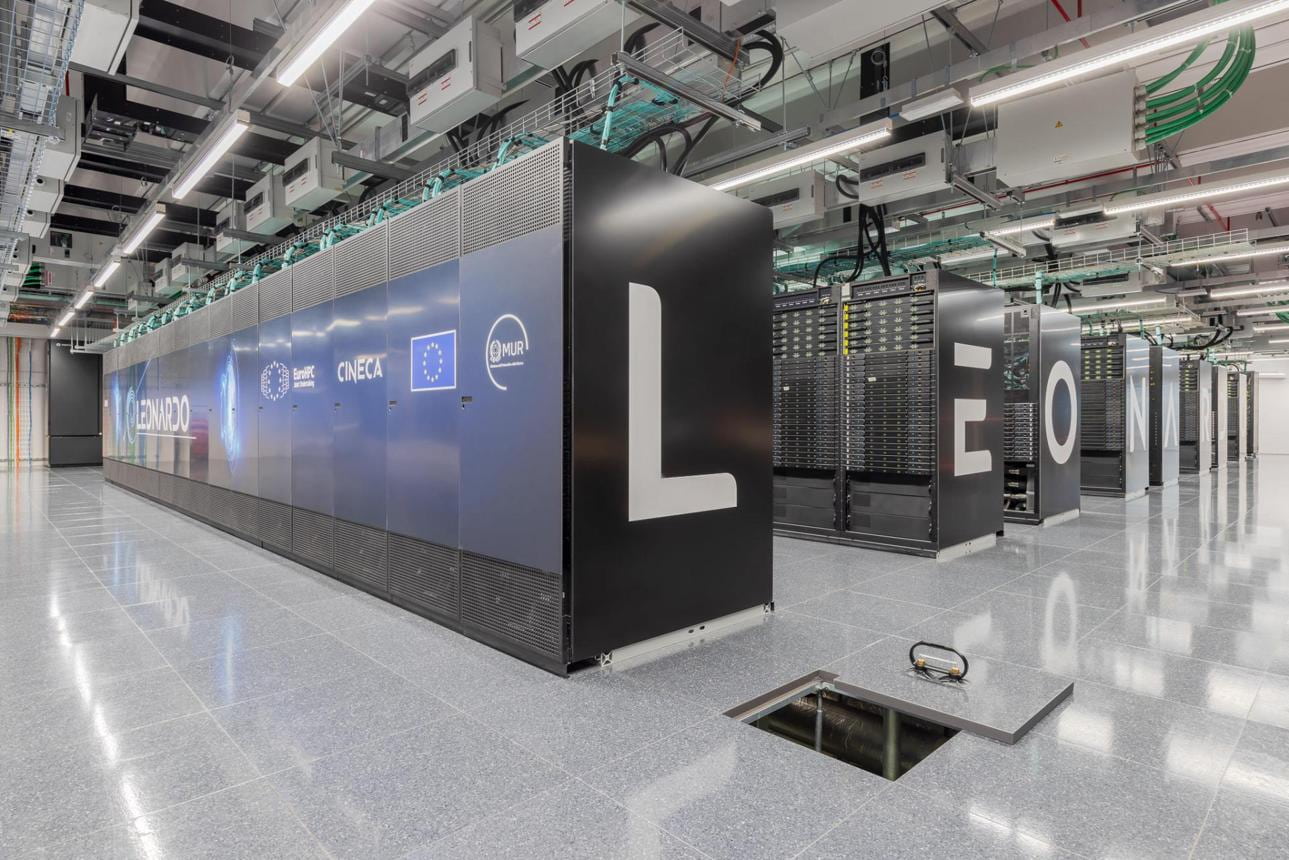
Lyon: Sometime this month the European Commission is expected to open a call for what it calls AI gigafactories, vast purpose-built sites for training the largest artificial-intelligence models. The move follows an agreement in principle reached on 1 June 2026 by the governing board of the European High-Performance Computing Joint Undertaking, the body that already runs the continent’s fastest supercomputers. Stripped of the branding, the plan answers a plain question that has nagged at European policymakers for two years. If the future of the technology runs on raw computing power, and that power sits overwhelmingly in the United States, what exactly does Europe control.

The gigafactories are the most concrete element of a wider Technological Sovereignty Package unveiled in June, which bundles a second Chips Act, a Cloud and AI Development Act and an open-source strategy into a single argument about autonomy. The numbers attached are enormous and, it must be said, aspirational. The Commission talks of mobilising two hundred billion euros through its InvestAI initiative, of some hundred and twenty billion for semiconductors and a further two hundred billion for data centres by 2036. Much of this would be channelled through a proposed European Competitiveness Fund in the next long-term budget, which is to say through money that does not yet exist and has still to survive negotiation among member states.

The case for acting is genuine. European researchers and start-ups routinely rent computing capacity from a handful of American providers, which sets their costs, shapes their timelines and, in a tense geopolitical moment, hands leverage to firms and a government beyond the Union’s reach. Public compute open to universities and small companies would lower a barrier that private capital in Europe has been unwilling to clear. In that light the gigafactories are less an industrial vanity project than a piece of research infrastructure, closer in spirit to a shared telescope than to a national champion.

Critics are not short of ammunition. Building the capacity is the easy part, they argue, and demand is the real uncertainty, since subsidised hardware is worth little without European models and firms hungry enough to fill it. There is the awkward matter of energy and water, as gigafactories devour both at a moment when the Union is straining to cut consumption of one and ration the other. And there is the perennial state-aid question, the risk that public billions crowd out private investment or simply chase a frontier that keeps receding as American and Chinese rivals spend faster.

The deeper tension runs through the sovereignty argument itself. Brussels insists it wants autonomy without autarky, capacity that reduces dependence while keeping European markets open to the world. Those goals pull against each other, and how the coming call is written, who may bid, on what terms and with what strings, will reveal which instinct is winning. A programme that quietly favours incumbents would betray the openness, one that ignores commercial reality would waste the money.

What is not in doubt is that the choice can no longer be deferred. Compute has become the ground on which the next decade of the technology will be contested, and Europe has spent long enough renting the ground from others. The gigafactories are a wager that it is not too late to own some of it. The bet may prove expensive, and it may prove late, but the alternative, drifting into permanent dependence on infrastructure built and governed elsewhere, is the one option the Union has decided it can no longer afford.