August 10, 2026
LATEST
Five Joint Defence Projects Launch Europe’s Military ShieldElectrification Plan Aims to Make Europe First Electro ContinentHorizon Europe Budget Fight Heats Up as Ministers Push BackGoogle’s DMA Fine Sets Off a Transatlantic Tariff ClashTwenty New University Alliances Join Erasmus for Two YearsForeign Subsidies Case Puts Temu in the EU’s SightsVan Tachographs Now Mandatory for Cross-Border FleetsStress Test Exposes Gaps in Euro Area Bank DefencesEurope Bets on a Gulf Partnership Before the Riyadh SummitWhy the Atlantic Route Now Runs Through MauritaniaKyiv and Chisinau Advance as the EU Accession Talks Gather PaceEurope’s New Digital Border System Beds In After a Rocky RolloutBrussels Mounts Its Largest Wildfire Response as the Fires SpreadRetail Spending Slipped in June, Wrong-Footing EconomistsHeatwave Warning Puts Brussels on Alert for Vulnerable GroupsKANAL’s 230 Million Euro Museum Sets a November Opening DatePension Savings Rules Get a Reset as the EU Scraps the 1% CapMedicine Shortages Move to the Heart of Europe’s Pharma ResetJapan Becomes Europe’s Closest Security Partner in AsiaCan Europe’s New Zealand Deal Anchor It in the Pacific?Five Joint Defence Projects Launch Europe’s Military ShieldElectrification Plan Aims to Make Europe First Electro ContinentHorizon Europe Budget Fight Heats Up as Ministers Push BackGoogle’s DMA Fine Sets Off a Transatlantic Tariff ClashTwenty New University Alliances Join Erasmus for Two YearsForeign Subsidies Case Puts Temu in the EU’s SightsVan Tachographs Now Mandatory for Cross-Border FleetsStress Test Exposes Gaps in Euro Area Bank DefencesEurope Bets on a Gulf Partnership Before the Riyadh SummitWhy the Atlantic Route Now Runs Through MauritaniaKyiv and Chisinau Advance as the EU Accession Talks Gather PaceEurope’s New Digital Border System Beds In After a Rocky RolloutBrussels Mounts Its Largest Wildfire Response as the Fires SpreadRetail Spending Slipped in June, Wrong-Footing EconomistsHeatwave Warning Puts Brussels on Alert for Vulnerable GroupsKANAL’s 230 Million Euro Museum Sets a November Opening DatePension Savings Rules Get a Reset as the EU Scraps the 1% CapMedicine Shortages Move to the Heart of Europe’s Pharma ResetJapan Becomes Europe’s Closest Security Partner in AsiaCan Europe’s New Zealand Deal Anchor It in the Pacific?
August 10, 2026
LATEST
Five Joint Defence Projects Launch Europe’s Military ShieldElectrification Plan Aims to Make Europe First Electro ContinentHorizon Europe Budget Fight Heats Up as Ministers Push BackGoogle’s DMA Fine Sets Off a Transatlantic Tariff ClashTwenty New University Alliances Join Erasmus for Two YearsForeign Subsidies Case Puts Temu in the EU’s SightsVan Tachographs Now Mandatory for Cross-Border FleetsStress Test Exposes Gaps in Euro Area Bank DefencesEurope Bets on a Gulf Partnership Before the Riyadh SummitWhy the Atlantic Route Now Runs Through MauritaniaKyiv and Chisinau Advance as the EU Accession Talks Gather PaceEurope’s New Digital Border System Beds In After a Rocky RolloutBrussels Mounts Its Largest Wildfire Response as the Fires SpreadRetail Spending Slipped in June, Wrong-Footing EconomistsHeatwave Warning Puts Brussels on Alert for Vulnerable GroupsKANAL’s 230 Million Euro Museum Sets a November Opening DatePension Savings Rules Get a Reset as the EU Scraps the 1% CapMedicine Shortages Move to the Heart of Europe’s Pharma ResetJapan Becomes Europe’s Closest Security Partner in AsiaCan Europe’s New Zealand Deal Anchor It in the Pacific?Five Joint Defence Projects Launch Europe’s Military ShieldElectrification Plan Aims to Make Europe First Electro ContinentHorizon Europe Budget Fight Heats Up as Ministers Push BackGoogle’s DMA Fine Sets Off a Transatlantic Tariff ClashTwenty New University Alliances Join Erasmus for Two YearsForeign Subsidies Case Puts Temu in the EU’s SightsVan Tachographs Now Mandatory for Cross-Border FleetsStress Test Exposes Gaps in Euro Area Bank DefencesEurope Bets on a Gulf Partnership Before the Riyadh SummitWhy the Atlantic Route Now Runs Through MauritaniaKyiv and Chisinau Advance as the EU Accession Talks Gather PaceEurope’s New Digital Border System Beds In After a Rocky RolloutBrussels Mounts Its Largest Wildfire Response as the Fires SpreadRetail Spending Slipped in June, Wrong-Footing EconomistsHeatwave Warning Puts Brussels on Alert for Vulnerable GroupsKANAL’s 230 Million Euro Museum Sets a November Opening DatePension Savings Rules Get a Reset as the EU Scraps the 1% CapMedicine Shortages Move to the Heart of Europe’s Pharma ResetJapan Becomes Europe’s Closest Security Partner in AsiaCan Europe’s New Zealand Deal Anchor It in the Pacific?

Nine Capitals Rebel Against Europe’s Green Company Car Push

When Europe’s transport ministers gathered in Luxembourg in early June, the headline business was a sober one: how to keep cutting transport emissions after 2030, once the current decade’s targets expire. Ministers reached a political agreement in principle on the shape of that post-2030 framework, the policy scaffolding that will carry forward measures such as the ReFuelEU rules for sustainable aviation fuel, the FuelEU regime for maritime CO2, and a planned revision of the alternative fuels infrastructure rules by the end of 2026. Yet the meeting will be remembered less for what ministers agreed than for the revolt it exposed.

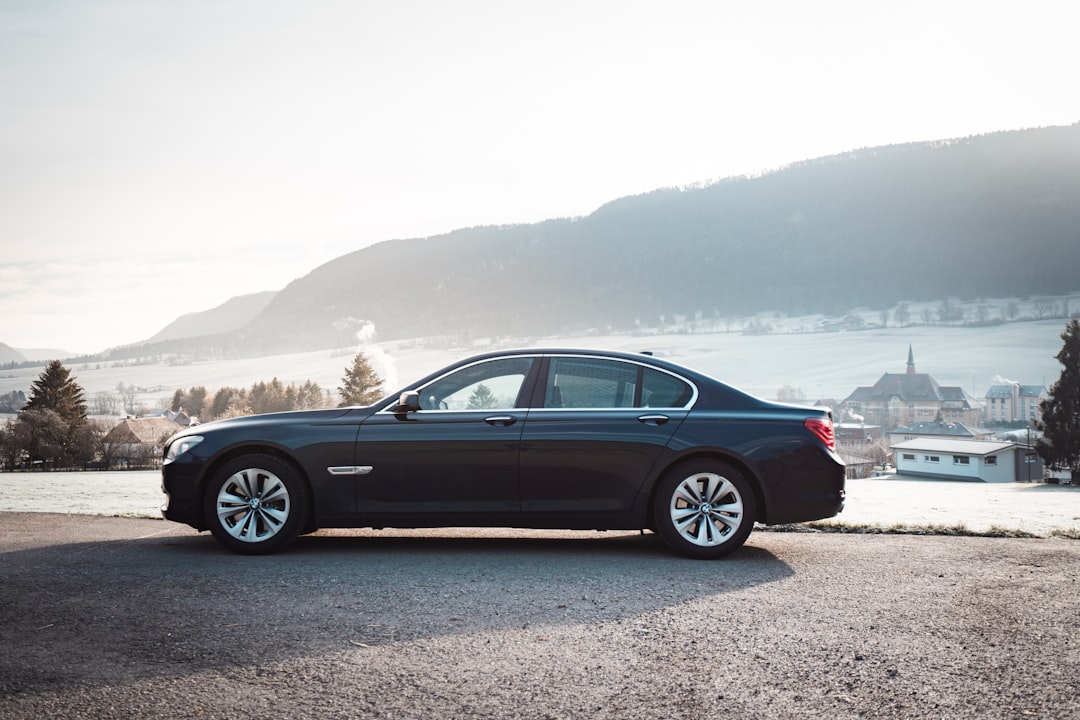
At the centre of the dispute sits a single, unusually targeted proposal: a regulation to green corporate fleets. The Commission wants companies with more than 250 employees or more than 50 million euros in turnover to clean up the cars and vans they buy. By 2030 their fleets would face two overlapping mandatory quotas, with roughly two-thirds of new vehicles required to be at least plug-in hybrid and a smaller share, in the region of 45 percent, fully battery-electric or hydrogen-powered, the precise figures varying by member state. A coalition led by Poland and including Bulgaria, the Czech Republic, Estonia, Hungary, Italy, Latvia, Slovakia and Romania moved to challenge it.

The logic of targeting fleets is stronger than the backlash suggests. Corporate and business buyers account for a large share of new car registrations across the Union, far above their share of the cars on the road, because companies replace vehicles quickly and then sell them on. Electrify the fleet today and you seed the second-hand market with affordable used electric cars three or four years later, reaching private buyers who would never purchase one new. In emissions terms, a mandate on a few thousand large employers is a more concentrated lever than trying to persuade millions of households. That is precisely why the Commission reached for it.

The objections, though, are not merely obstructionist. The rebelling capitals are disproportionately in central and eastern Europe, where charging networks are thinner, electricity can be more carbon-intensive, and company fleets include large numbers of vans for trades and logistics that have few convincing electric equivalents at an affordable price. A uniform European quota lands unevenly on such economies, and ministers from those states frame the fight as one about fairness and feasibility rather than ambition. Road transport bodies have echoed the worry that rigid purchase quotas could raise operating costs for firms without guaranteeing the infrastructure to use the vehicles.

There is also a deeper tension about method. The fleet regulation is a demand-side mandate layered on top of the supply-side CO2 standards that already push carmakers toward zero-emission models. Supporters argue the two reinforce each other: rules on manufacturers create the cars, rules on large buyers create the market. Critics counter that stacking mandates removes flexibility, picks technological winners prematurely, and assumes a charging rollout that public budgets have not yet delivered. The plug-in hybrid quota is particularly contested, since real-world emissions from such vehicles often exceed laboratory figures when drivers neglect to charge them.

What the Luxembourg meeting revealed is that the easy phase of European transport decarbonisation, setting distant targets, is giving way to the hard phase of allocating who pays and when. The post-2030 framework commands broad agreement in the abstract precisely because its costs are deferred. The fleet regulation provokes a coalition of nine governments because its costs are immediate and fall on identifiable firms. The Commission can argue, credibly, that fleets are the single most efficient point of intervention in the passenger-car market. The rebels can argue, also credibly, that efficiency calculated for the Union as a whole can still be punishing for its poorer members. Reconciling those two truths, rather than choosing between them, is the negotiation that now lies ahead, and its outcome will signal how much real burden Europe is willing to impose to meet goals it has already proclaimed.