Brussels: On 12 June the Council agreed its negotiating position on a package meant to tighten the Carbon Border Adjustment Mechanism, the Union’s levy on the carbon embedded in imported goods. The timing is telling. The mechanism only entered its definitive phase on 1 January, when importers began paying for emissions rather than merely reporting them, and already governments are moving to close the gaps that the first months of operation exposed.
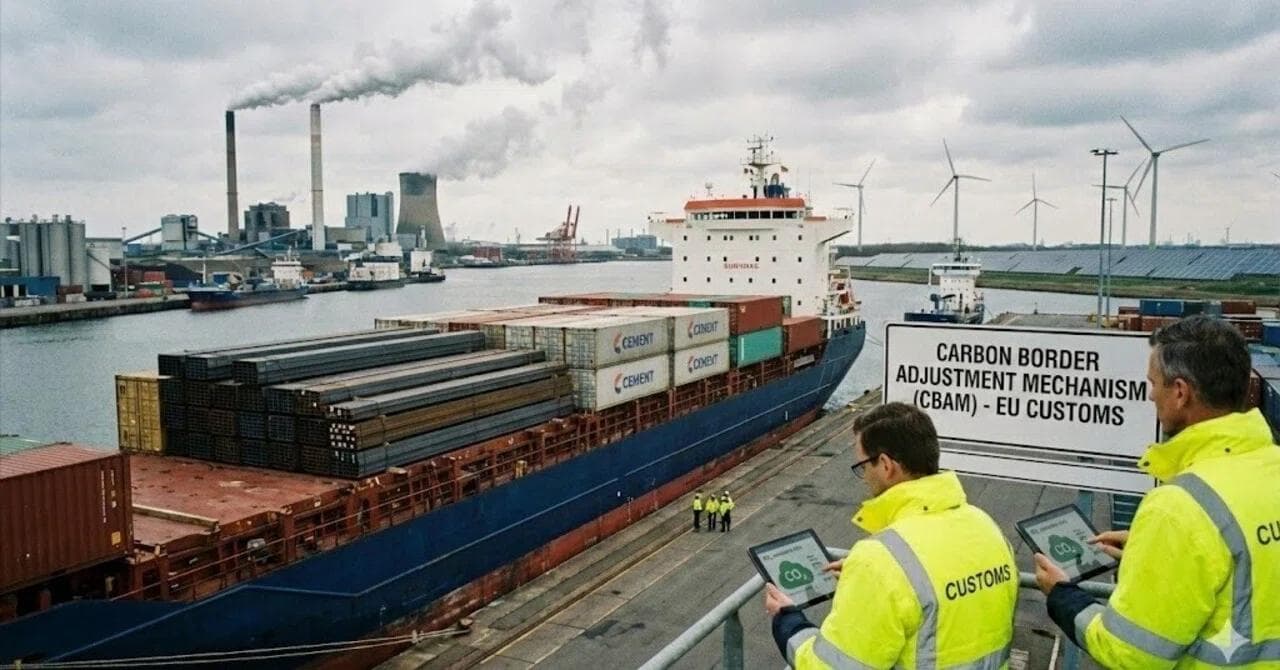
The design is straightforward in principle. Importers of cement, iron and steel, aluminium, fertilisers, electricity and hydrogen must buy certificates priced off the EU emissions trading system, so that foreign producers face a carbon cost comparable to European factories bound by the same scheme. The stated aim is to stop carbon leakage, the migration of dirty production to jurisdictions with looser rules, while protecting domestic industries that already pay for their emissions at home.
The trouble is that any border tax invites avoidance, and carbon is no exception. The Council’s anti-circumvention measures target the most predictable tricks. One is resource shuffling, where exporters route their cleanest output to the European market while selling carbon-heavy production elsewhere, leaving global emissions unchanged but the paperwork flattering. Another is the slight processing of a covered material into a downstream product that escapes the levy. A third concerns electricity, where attributing emissions to a particular megawatt crossing a border is technically fraught and easily gamed. That governments are tightening these rules within months of launch is less an admission of failure than a sign the mechanism is being taken seriously enough to be worth dodging.
The harder questions are strategic. A 50-tonne threshold exempts smaller importers to spare them disproportionate compliance costs, a sensible simplification that nonetheless leaves a channel that determined avoiders can exploit by fragmenting shipments. The deeper issue is coverage. As long as the levy applies only to a handful of raw materials, the incentive to move processing one step downstream, beyond the border of the scheme, remains intact. Extending it to finished goods would blunt that incentive but multiply the administrative burden on customs authorities already straining to verify emissions data they cannot directly observe.
There is also the world beyond Europe to consider. Trading partners, particularly developing economies that export steel and fertiliser, view the mechanism as a unilateral tax dressed in green language, and several have hinted at challenges under World Trade Organization rules. The Union’s defence is that the levy treats imports and domestic production identically and therefore does not discriminate. That argument is legally plausible, but it will be tested, and a ruling against Brussels would force an awkward redesign. The diplomatic cost is already visible in the linkage some partners draw between carbon at the border and wider trade tensions.
Whether the mechanism works should be judged against its actual purpose, which is narrower than its rhetoric. It will not by itself decarbonise global heavy industry, and treating it as climate policy writ large sets it up to disappoint. Its realistic job is to remove the perverse incentive for European firms to relocate, thereby protecting the integrity of the emissions trading system as the free allowances that once shielded industry are phased out. On that measure, the test is not how much foreign behaviour it changes but how convincingly it reassures European producers that staying put will not be punished.
The certificate price, set as a quarterly average of trading-system allowance auctions, ties the levy directly to the European carbon market, so its bite will rise as that price climbs. That makes the mechanism politically self-reinforcing for now, but also exposes it to the same volatility that has long unsettled industrial planners. The Council’s tightening package is a reasonable piece of housekeeping. The larger judgment, on coverage, enforcement capacity and the patience of trading partners, has been deferred rather than settled, and it is there that the mechanism’s credibility will ultimately be decided.